Ragyō Kiryūin VS Lusamine (Kill la Kill VS Pokémon)

“A mother's love for her child is like nothing else in the world. It knows no law, no pity, it dares all things and crushes them remorselessly all that stands in its path.” - Agatha Christie
Ragyō Kiryūin, REVOCS’ Life Fiber-infused CEO from Kill la Kill.
Lusamine, the deceitful President of the Aether Foundation from Pokémon Sun and Moon.
Those who believe the saying “Mother Knows Best” have clearly never met these mothers. Within their companies’ walls, these two leaders may seem like caring and fashionable ladies. However, deep down lies a sadistic woman driven by science, with their two children falling victim to experimental torment coinciding with the loss of their beloved husbands.
It only took fusing with an otherworldly alien force to where they drove further into villainy, and embraced it. Whether it be living threads or a parasitic jellyfish, their authority is made clear. But only one will end up beneath the other’s heel in this DEATH BATTLE!
Before We Start…
WARNING!: Kill la Kill is a series with many showings of visible nudity and blood with Ragyō herself being a controversial character known notoriously for torturing and abusing her children both physically and mentally in several different ways throughout the show. If you’re uncomfortable with these topics, we recommend you don’t read this blog.
In regards to what media will be used for both, Ragyō is simple. We will be using the main Kill la Kill anime and manga with various art books, interviews, audio dramas and the like being used as supporting evidence. As for the big elephant in the room… yes, Kill la Kill: IF is in fact canon and will be used in this blog. At the Studio Trigger panel at Anime Expo 2018, Hiromi Wakabayashi, one of the lead script writers for Kill la Kill, states that he considers IF to be a part of the same story as the original anime. Not only that but the creator of Kill la Kill himself: Kazuki Nakashima, had full supervision over the project. According to interviews with both IF’s game director and Nakashima, what Kill la Kill: IF is basically a side-story that was made up of elements that Nakashima wasn’t able to put in the show proper and takes place somewhere after the 8th episode, making it essentially Episode 8.5 of the anime, Satsuki’s new form that appears in the game, “Junketsu Shinzui”, was always meant to be a part of the anime alongside Ryūko’s “Senketsu Kisaragi” form in the final battle against Ragyō, but likely couldn’t make it in due to time constraints. Not to mention the end of Ryūko’s campaign even directly transitions straight into the anime. So say what you want but the game is undoubtedly canon to the series as a side-story adjacent to the original anime and will be included as primary research as well.
Now for Lusamine, obviously the Pokémon Sun and Moon, Pokémon Ultra Sun and Ultra Moon, and other mainline series games will be our primary source of research, as well as related spin-offs like Pokken and the Pokémon Legends games. Now here is where things get a bit complicated. As some of you may know, compositing for Pokémon characters is a rather controversial topic as whether it be different media adaptations, remakes of games, or new installments entirely, each of them can have even just one minor change that is different from the original canon. This is especially prevalent with Lusamine as she is one of, if not the most inconsistently written character in the entire franchise. What has been decided is that we’ll focus on a “soft composite” of Lusamine across her many appearances with a priority being on the mainline games and also the Pokémon Adventures manga in terms of arsenal and what Pokémon she will have access to. This is because as mentioned before, about how the narrative of certain stories shifts between adaptations, Lusamine being the biggest offender of this. Lusamine doesn’t even fuse with Nihilego in the Ultra games, her entire arc had been basically rewritten in favor of Mr. Nuzlocke Killer, so she can catch it and save all of Alola. However, this discrepancy has actually been cleared up in the Pokémon Adventures manga as the manga basically combines both S&M and USUM’s plotlines together without completely altering Lusamine’s character. She still wants to capture Necrozma but in order to prevent the protagonists from stopping her, she fuses with Nihilego. This leads us to believe that the manga is fine and will be included as supplemental material in this blog.
Now when it comes to the mobile gacha game: Pokémon Masters EX, it’s a tricky case as there is a lot that is contradicted from the games (Lysandre’s character arc is non-existent, Red and Elio are different ages from when they first met in canon, Ash’s entire existence, etc.), it’s a different continuity altogether. Basically this means no scaling in that game will be used here, but it isn’t entirely unusable. While it is a different continuity separate from the mainline entries in the series, Pokémon is no short of alternate universes with stories in Masters directly referencing that concept, as well as the devs of the game also working with The Pokémon Company to make sure the elements told in the game go in line with the main canon. In the case of Lusamine specifically, the events in Masters EX take place sometime after the events of the mainline games as she directly mentions what took place in the mainline games (presumably the Ultra games as Lillie mentions witnessing Necrozma before which didn’t happen in the original, as well as what Lusamine describes could be in reference to when she accidentally let Necrozma come to Alola and open a bunch of wormholes, as opposed to the original games where she did it directly, but that is up to interpretation). For completionist’s sake, any unique abilities or items that Lusamine and her Pokémon can obtain will be given to her as a means of expanding her arsenal as well as any important statements and information that can be attributed, but no new Pokémon unique to Masters will be included which means no, she will not be getting Necrozma in this blog. If she gets anything from the game, it will only be attributed to Pokémon she already has access to in the mainline game and manga adaptations.
Now that those are out of the way, we will tackle the bigger question. Are we including the anime? We’re gonna get straight to the point on this one-

The anime has by far the worst characterization of Lusamine in the series. Instead of being rude and neglectful towards her kids, she genuinely cared for them and sacrificed herself so they wouldn’t be taken by Nihilego. If that isn’t a complete 180 from how she is in the games then I don’t know what is. Because her character is so much different from other versions of her, much like Necrozma, Pokémon that Lusamine has that are unique to the anime, such as Absol and Salazzle, will not be included here as they are associated to a version of Lusamine way too far removed from her OG counterpart.
That doesn’t mean the anime will be entirely off the table though because as of right now, it is the only real clear showing of Mother Beast Lusamine actually fighting on her own without any Pokémon, compared to the games where she just floats in the back and does nothing. The anime also provides more information on cosmology and worldbuilding so we will still take information shown in the anime and adjacent movies with a grain of salt as supporting material in the form of discussing different interpretations of certain arguments, as long as it doesn’t directly contradict the main canon.
TLDR: Ragyō will be getting the Kill la Kill anime, manga, and Kill la Kill: IF game as primary evidence and occasional side material like audio dramas and databooks for supplementary evidence. Lusamine on the other hand will be a “soft-composite” of her appearances in the mainline games and the manga in terms of equipment and support. However, all licensed Pokémon media will still be taken into account with media like the anime, mangas, spin-offs, TCG, etc. being used as supplemental material in regards to providing extra content whether it is additional abilities or cosmology and/or other related info. This is as long as it doesn’t contradict what has already been established in the primary canon (AKA the mainline games) which will take priority.
Background
Ragyō

“You scraps are beyond worthless. Only those I acknowledge, shall be deemed beautiful!”
Tens of thousands of years ago, mankind would be changed forever as we know it when the alien organisms known as the Life Fibers crashed onto Earth. These living threads essentially act as parasitic lifeforms that latch onto homo-sapiens, or humans, to speed up their evolution process. Over time, the Life Fibers would go into a dormant state, waiting for humans to reach a level of evolution that would allow us to cover ourselves and wear clothes. The original source of these Life Fibers, the Primordial Life Fiber, would be found and reawakened in the modern day by the magnificent Ragyō Kiryūin.
As the elder of the Kiryūin Clan, Ragyō became the primary watcher of the Primordial Life Fiber, with plans to take over the world. She would marry the scientist, Sōichirō Kiryūin in order to dissect what the Life Fibers were truly capable of. So she had a daughter, Satsuki, and attempted to inject the fibers into her body. The test was deemed a failure as the baby was too old, so Ragyō tried again with her second child, Ryūko. That test was also unsuccessful so with no remorse, Ragyō threw Ryūko away.
With these new discoveries, Ragyō became obsessed and enamored, kickstarting her years-long plan to make all of humanity succumb to the Life Fibers. She created the fashion and clothing company “REVOCS Inc.” to where she could hide dormant Life Fibers inside of clothing. She created an artificial lifeform known as Nui to become REVOCS’ Grand Couturier so she can quickly spread her fiber-infused clothes across the planet and even infused these Life Fibers into her own body. Seeing his wife slowly become a deranged half-alien lunatic, Sōichirō ran away, faked his death, and changed his identity to that of Isshin Matoi so that he could study and make a weapon that could destroy the Life Fibers for good. All while taking care of the abandoned Ryūko.
Flash forward even more years to the present and enter Honnōji Academy, an enormous institute overlooking Honnō City. This academy was actually commissioned by Ragyō herself to be the testing grounds for many experiments involving the Life Fibers, with Satsuki being the one in charge of governing both it and the entire city, keeping all of its residents in check. One day, Honnōji Academy would have a new attendee: Ryūko Matoi, who came to the academy with answers about her father- who is actually dead, he’s not faking it this time. She would arrive with the weapons her father left behind, a Scissor Blade and a living sailor uniform named Kamui Senketsu to challenge the Student Council President Satsuki Kiryūin and her Elite Four, hoping to find those answers she has been searching for, but to no avail.
What Ryūko was unaware of was that Honnōji Academy had sinister plans set in motion, with Ragyō as its conductor. In the shadows, Ragyō oversaw the working of her grand spectacle finally visualized with her ambitious daughter at the helm. Satsuki would command a fleet of student soldiers bent on conquering all remaining schools in the Kansai District not under Honnōji’s control. This “Tri-City Schools Raid Trip” would end in a success and here was when the first step in Ragyō’s dream would truly become a reality. Everyone in Honnō City was forced to partake in this event and forced to wear REVOCS-made clothing and the academy was rebuilt to become a giant stadium in Ragyō’s name. The “Culture And Sports Grand Festival” had begun. The plan was simple: Have everyone wear REVOCS clothing in order to encase them in their own clothes made from Life Fibers and use them as fuel for her recently-created Life Fiber suits called “COVERS”.
This plan would have been a success if it weren’t for one thing. Being betrayed by her own daughter. In secret, Satsuki had been planning a rebellion against her own mother who had manipulated and groomed her into becoming just another cog in this globe-dominating machine. Despite the festival being foiled by her own daughter, people were still being assimilated into the COVERS and it only took a month’s time for all schools in Japan to be overtaken. The truth was Ragyō wasn’t simply wanting to take over the world, her goal was much more complex. By controlling the global clothing market, Ragyō would control all of Earth’s population and have them succumb to the Life Fibers. Using the Primordial Life Fiber’s power to have everyone turn into empty fiber-covered husks that will soon cover the planet in a “Starseed Cocoon Sphere” that will use Earth as an energy source to eventually cause it to explode, sending billions of Life Fibers to drift and reproduce across the universe. This would be dubbed the “Cocoon Sphere Genesis”.
This was the endgame. COVERS are everywhere, the Primordial Life Fiber is intact u̶n̶t̶i̶l̶ i̶t̶ w̶a̶s̶n̶'t, REVOCS has officially taken over 100% of the global clothing market. Ragyō’s dream would finally come to fruition… until her two daughters showed up to ruin everything. Ryūko and Satsuki knew the truth about their relationship as sisters and shared the same goal, to stop the Cocoon Sphere once and for all. Having the Primordial Life Fiber and COVERS wasn’t enough to carry out the plan though so Ragyō had a secret weapon ready to be unveiled when the time was right, a Life Fiber garment made by Nui that would make everyone experience Absolute Submission, “Shinra-Kōketsu”. This was how she would reach all of the population and turn them into slaves of clothing.
Absorbing Nui and the Primordial Life Fiber’s power, this plan actually almost succeeded, Earth had become the beautiful red Cocoon Sphere that Ragyō had envisioned, until one rebellious high-school girl with a Scissor Blade and sailor uniform showed up to rightfully kick her ass. The failed experiment, who Ragyō presumed dead, was actually proven to be Sōichirō’s greatest success as the bond between Ryūko and Senketsu was what ultimately did Ragyō in. Humans are humans and clothing is clothing, and there’s nothing that can change that. In a climactic battle, Ryūko would defeat her and reverse the effects of the Cocoon Sphere Genesis with her own Absolute Submission, leaving the CEO powerless. Those who live by the Life Fibers die by the Life Fibers as Ragyō chooses to take her own life. Even in her final words, she leaves Ryūko with a chilling warning. Whether she is alive or dead, the Life Fibers will always be out there, drifting the endless cosmos, searching for their new host.
Lusamine

“If you’re not beautiful enough to be worthy of my love, then I don’t NEED you!”
Ah, the scenic Alola region. Whether it’s the bustling shopping districts of Hau’oli City, or the breathtaking views of Mount Hokulani and the Vast Poni Canyon, there are a lot of things that make it one of the top tourist destinations in the Pokémon world. However, if you cross paths with the nefarious street gang known as Team Skull, have no fear because if you put your trust into the Aether Foundation, your Pokémon are in safe hands. The one running this glorious safe haven is none other than their current President, Lusamine.
Lusamine’s father, the previous president, created Aether Foundation as a means of protecting Pokémon because he cared deeply for them, which Lusamine would take up that responsibility many years later. She was basically Alola royalty, living in a giant mansion on a private artificial island called Aether Paradise, where the foundation would do most of their research. However, there was something “off” about Lusamine. She has always appeared as a gentle motherly figure, but there was something darker, far more sinister underneath the surface.
Over time, there have been alleged sightings across Alola of these weird phenomena that were believed to be portals to another world housing otherworldly lifeforms resembling Pokémon. Scientists at the Aether Foundation dubbed these as “Ultra Wormholes”, and one of their lead researchers being Lusamine’s husband, Mohn. Mohn was actually the one to confirm the existence of the Ultra Wormholes and the alien lifeforms that were named “Ultra Beasts”. However, his research would come to a halt as on one mission, he would be sucked in through an Ultra Wormhole, and never return.
This caused Lusamine to break, both psychologically and emotionally. After Mohn’s disappearance, she became obsessed with trying to learn about the Ultra Beasts in order to save her husband, which then led to the abuse and neglect of her children: Lillie and Gladion. Lusamine became so obsessive in fact that she even forced Lillie to dress up like an Ultra Beast because in her mind, Ultra Beasts were the only thing considered “beautiful” to her. This torment eventually led to her children running away from home, stealing a few Pokémon in the process. Those being Type: Null, a man-made Pokémon created to kill Ultra Beasts, and Cosmog, a Pokémon with the power to create Ultra Wormholes.
Feeling betrayed by her children, all Lusamine was left with was her goal of creating a perfect paradise where she and her Ultra Beasts can live peacefully. To do this, she would manipulate Team Skull to kidnap Lillie and force her to give Cosmog back, for this would allow Lusamine to open up Ultra Wormholes all across Alola so she can meet with her beloved Ultra Beasts. Lusamine’s plan would be set in motion, she would venture off into the Ultra Wormhole and catch an Ultra Beast by the name of Nihilego. This changes slightly in the manga, where her plan was not just to meet the Ultra Beasts, but to meet and capture the ultimate Ultra Beast, the Blinding One, Necrozma. No matter what plan she would have, she would be confronted by her two children and a young protagonist. To prevent them from interfering with her plans, she would use the powers of Nihilego and fuse with it, becoming a monster.
In a climactic battle, Lusamine would end up losing. The influence from Nihilego would stop poisoning her mind, leaving her in a weary state. Before being taken back to Alola she had realized just how truly beautiful her daughter had become. In the aftermath of events, Lillie and Gladion would both venture off to the Kanto region with Lillie trying to find a way to cure Lusamine of Nihilego’s influence while Gladion goes on a journey of self-discovery. It was then one day where she would come face-to-face with her husband one last time. Mohn had come to visit Aether Paradise, not remembering anything that had happened after he had returned from the Ultra Wormhole. He had actually been stranded on an island running the Poké Pelago as a bean farmer. Lusamine put into perspective that her ex-husband forgetting everything was actually the best outcome for him and let him go, despite everything she had done just to get him back.
Even so, this gave Lusamine a new goal, to make sure her children had someone to take care of them. Although there will be trial and error, she will try her hardest to rekindle what she once had to grow and become a better person and mother. Maybe, just maybe, she will soon be worthy of everyone’s love once more.
Experience & Skill
Ragyō

Sadistic actions aside, you can’t deny that Ragyō is a very successful businesswoman. Her clothing brand: REVOCS, has products spanning the globe. By the end of the anime when she was about to enact the Cocoon Sphere, 100% of the global clothing market is controlled by REVOCS, meaning that all of Earth’s population wears REVOCS-made clothing in one form or another. Hiding Life Fibers inside of sewn clothes is only a tiny fragment of what Ragyō’s mind is truly capable of.
Marrying Sōichirō allowed Ragyō to conduct many experiments regarding the Life Fibers, infusing them into both of her daughters, as well as herself! She was even able to make an entire human-shaped lifeform made entirely out of Life Fibers: Nui Harime, who would serve REVOCS and Ragyō until the very end. This combined with her taking in Rei as her new secretary, manipulating her into becoming just as loyal as Nui makes Ragyō a terrifying force, leading to her conquering all schools under Honnōji Academy’s control with her army of COVERS in just a month’s time span.
As far as actual combat skills go, Ragyō has taken out a horde of armed soldiers as well as having fought against Ryūko and Satsuki many times throughout the series and she has even defeated Satsuki once before. She could also deflect both Ryūko and Satsuki’s sword strikes at the same time from different sides, even during aerial combat. All of this culminates into the final battle where Ragyō is still able to keep up with Ryūko while both are in their strongest forms thanks to the power that the Life Fibers give.
Lusamine

Lusamine is a very accomplished individual. Being the current president of the Aether Foundation has of course led to her being a leading benefactor for a lot of major scientific advancements. Such projects include the “Beast Killer Project” which led to the creation of Type: Null, an artificial Pokémon made with the purpose of fighting and defeating Ultra Beasts. Not to mention her countless days researching the Ultra Wormholes and Ultra Beasts after the loss of Mohn. She is also skilled in persuasion and manipulation as it is revealed later in the game's story that Lusamine had used Guzma and Team Skull in order to kidnap Lillie and get Cosmog back.
Not only is she book-smart, but battle-smart as well. While we haven’t seen her battle much in the games, she still carries a full team of 5 or 6 Pokémon which she has used to battle the player with. You can battle Lusamine a total of 4 times across both of her mainline game appearances. The first battle with Lusamine is inside of her trophy room at Aether Paradise which happens in both the original and Ultra games. The second time you battle her however changes between games as her narrative is different in both.
In Pokémon Sun and Moon, you fight Lusamine after she had fused with Nihilego. Meanwhile, in Pokémon Ultra Sun and Ultra Moon, the fusion battle is scrapped in replacement of you fighting Lusamine in the Pokémon League’s “Title Defense” mode in the post-game, after you’ve already become champion. This is impressive on Lusamine’s part as to even battle the champion, you have to first defeat Alola’s Elite Four, who are amongst the strongest Trainers in the entire region.
Equipment
Ragyō
Life Fiber Swords

Ragyō carries a pair of sharp swords made from ultra-hardened Life Fibers produced from the Primordial Life Fiber. These swords are able to sever the connections of Life Fibers, including the ones infused within her and Ryūko’s bodies. She is even able to transform the swords to make them spikier and more deadly.
Kamui: Shinra-Kōketsu

In the world of Kill la Kill, humans can don clothing made up of Life Fibers that allow them to increase their power and awaken special abilities. At Honnōji Academy, students wear what are known as “Goku Uniforms”, special uniforms made from Life Fibers that increase the strength and durability of the wearer. The higher the rank, the more powerful Goku Uniform they acquire. 1★ Uniforms are made from 10% Life Fibers, 2★ Uniforms are made from 20% and so on and so forth. However, there are clothing that are made up of 100% Life Fibers called “Kamuis”. Developed by the Kiryūin Family, Kamuis are able to draw power from their user by consuming their blood. You’ve probably seen the ones worn by Ryūko and Satsuki: Senketsu and Junketsu, but Ragyō had created a third Kamui in secret called “Shinra-Kōketsu”.
Inspired by traditional Japanese wedding dresses, Shinra-Kōketsu was designed by Nui Harime with aid from Honnōji Academy’s Sewing Club who were mind-controlled at the time. It was designed to be the “Ultimate Kamui”, meaning its capabilities are comparable or even superior to that of Senketsu and Junketsu in their base forms. When worn, Ragyō’s power is increased. Not only is she physically stronger but her control over Life Fibers is amped to an absurd degree. The Life Fibers infused within the Kamui itself can be manipulated to become tendril-like weapons, jet-boosters for flight, and can absorb others into itself. The most deadly ability gained from it however is “Absolute Submission” which allows Ragyō to freely control all Life Fibers. More on that later.
“Kill la Kill: IF” COVERS Challenge Items (Debatable)

In a sidemode of Kill la Kill: IF called the “COVERS Challenge”, your character can pick up items or power-ups scattered on the ground to help you in battle. These Items include Mystery Croquettes for restoring health, Mako’s brass knuckles for increasing your strength, and Aikuro’s needles for increasing your “Valor Gauge”, an in-game mechanic relating to what is essentially a “rock-paper-scissors” system that occurs during fights (for more information on what we mean, read the page here), but it is very much inapplicable to this debate.
Note: While they appear in what is essentially the “Fighting Polygon Team” mode of IF, outside of the game’s main story, the functions of these items are relatively harmless for us not to at least mention them.
Lusamine
Ultra Balls

Poké Balls are scientifically-advanced handheld capsules that Trainers use all over the world to capture Pokémon. They generate a beam of light that will target the Pokémon and shrink them down so they can fit into the Poké Ball. Pokémon that are caught inside Poké Balls are trapped inside of a digital subspace, waiting to be released for battle. This essentially means that they are transmuted into data which can then be transported to a PC system for storage. Humans can not be caught inside of Poké Balls, as shown in the anime and games.
Lusamine is shown to carry all of her main Pokémon in Ultra Balls, which are more effective than Great Balls, which are more effective than your standard Poké Ball.
Beast Balls

Beast Balls are a unique type of Poké Ball. They were created by the Aether Foundation and the Ultra Recon Squad, with help from Team Plasma’s Colress. Beast Balls were made with the purpose of specifically catching the Ultra Beasts, having a low capture rate when used against any other Pokémon. In the games, Lusamine uses a Beast Ball to capture a Nihilego.
However, in the manga, Lusamine was delivered 100 Beast Balls by Blake (who was disguised as Colress at the time) with the means of helping her catch Necrozma. Although she was unsuccessful, she did however capture Phyco’s Naganadel and several other Ultra Beasts.
5★ Power-Up

In Pokémon Masters EX, this type of power-up allows for you to increase a 5★ Sync Pair’s HP by 5 and all related stats (Attack, Defense, Special Attack, Special Defense, Speed) by 2.
Up to 20 5★ Power-Ups can be stacked onto a 5★ Sync Pair at a time which allows some Sync Pairs like Lusamine to upgrade from a 5★ Sync Pair to a 6★.
X Speed All

In Pokémon Masters EX, Lusamine has an “X Speed All” when partnered with her Milotic. This allows her to raise the Speed stat of all allied Sync Pairs by 2 ranks.
The X Speed All has only 2 uses per battle.
Type Gear

Type Gear are equippable items found in Pokémon Masters EX which can boost stats of sync pairs when in battle. A combined trio of a bracelet, bandana, and pin, these increase stats based on the Type associated with the Sync Pair (as shown in the image above). Lusamine is lucky enough to have 3 Sync Pairs with her in this fight, each assigned a different type. This means it is in her best interest that she have access to the Grass, Water, and Bug Type Gears depending on which Sync Pair she is using.
Other “Pokémon Masters EX” Items (Debatable)

Aside from the Sygna Suit and other niche items mentioned, Pokémon Masters EX provides a lot more in both the Battle Villa and Battle Rally modes inside the in-game shops. You can purchase these items and then use them wherever you please so you can make the argument that they should be fair game here.
These items also give Lusamine’s Pokémon some frankly insane bonuses when fighting.


Abilities
Ragyō
Life Fiber Manipulation

Life Fibers are stated to be as strong if not stronger than steel. Being infused with these Life Fibers, Ragyō has been blessed with the ability to manipulate these living threads at will. She can bind others with a single fiber (as shown above) or summon many fibers at once to attack in multiple directions.
Ragyō can also create explosive bullets out of Life Fibers with varying sizes and can condense said bullets into a large ball that shoots out bullets before exploding. These bullets are also durable enough to block attacks and can release Life Fibers upon hitting the ground or opponents.
Mind Stitching

Ragyō can also manipulate Life Fibers with a technique known as “Mind Stitching”. By infecting nearby targets with Life Fibers, said fibers go into their brain and their nervous system, essentially becoming Ragyō’s mindless slaves who fight on her command.
The range of this attack can spread to dozens, possibly thousands of targets at once but the true limit to how many can be controlled at a time is unknown. However, the effects can be negated by forcibly removing the Life Fibers from the brain or cutting them before they can reach the target.
Flight

Unlike her daughters, Ragyō is able to freely fly around without the use of a Kamui. Combine this with her swords and she becomes exceptional in aerial combat.
Regeneration

Having Life Fibers infused within her body, Ragyō’s regenerative abilities are incredibly potent in their affect. She has reattached lost limbs like her hand and even her head with ease. According to Ragyō herself, as long as a single thread connects her head to her body, she can regenerate back to normal (her headless body can even fight on its own). This is because unlike ordinary Life Fibers, the ones fused into Ragyō’s body are tougher and can regenerate instantly whether or not they’ve been fully cut through.
Life Fibers actually become stronger if their host is in danger and the speed of regeneration is sped up. This is useful for Ragyō as she has experienced numerous near-death situations but has been saved thanks to her insane healing factor. Such cases include having survived and regenerated from impalement through the heart, a giant hole straight through her chest, being sliced to pieces, and multiple gunshot wounds to the face.
Energy Blasts

Ragyō, other than manipulating Life Fibers, has shown the ability to generate large blasts of energy with little to no effort. These energy blasts differ from standard big “f*ck you” blasts, blasts from multiple angles even from places where she isn’t standing, and erupting pillars of energy from the ground which she can summon multiple of at once.
Light Manipulation

While it isn’t too combat-applicable, Ragyō’s mere presence generates a flash of rainbow light whenever she appears. Satsuki is also able to do the same thing, guess it runs in the Kiryūin family.
In Kill la Kill: IF, Ragyō can actually use her light offensively as an attack… somehow.
Air Manipulation

In her battle with Ryūko and Satsuki, Ragyō can create small air slashes as a side-effect of swinging her sword (as shown above). Similarly enough, Satsuki can make giant airbursts through sheer aura alone. I swear this has to be a genetic thing…
Astral Projection

Ragyō has created a tangible projection of herself made purely out of Life Fibers in which she used to communicate with Ryūko from far away. She is able to regenerate this projection if damaged, stretch and reform its body as she pleases, and can disperse when she sees no need for it anymore.
Absolute Submission

The main ability gained from wearing Shinra-Kōketsu. Absolute Submission not only allows for Ragyō to freely control Life Fibers from within herself or her Kamui, but all Life Fibers present on the battlefield are under her control. By using Rei as a human sacrifice and absorbing her into Shinra-Kōketsu, Ragyō can create a glowing orb of energy that is capable of depowering any weapon or clothing that uses Life Fibers to function by creating a “field” of light. Because Ragyō was using Rei in order to activate the field, once the orb is damaged or Rei is ejected from Ragyō, the Absolute Submission Field is dispersed and its effects will no longer be active. In order for Absolute Submission to stay active, it must ”require a constant supply of energy from an outside human source”.
Ragyō can also weaponize Absolute Submission as a giant energy blast, morph the Primordial Life Fiber into liquid to create a massive flood which devours anyone caught in it, or use the PLF’s individual threads to bind her victims.
Resistances
Minute Energy Absorption and Mind Manipulation: Life Fibers naturally feed off of the bio-electrical currents in their host’s nervous system over time when infecting them. If infected internally, the host won’t be able to take the strain which eventually results in their death. Life Fiber-infused beings like Ryūko are able to resist and counter Mind Stitching, which directly targets the host’s nervous system and controls their mind. Ryūko can also resist the fibers’ effects of making the host go berserk if they lose control of themself.
Wearing Life Fibers continuously for the first 20 years of their life will grant the host a resistance to their effects and the students of Honnōji Academy have already built up resistances through their Goku Uniforms, with those directly infused with Life Fibers exceeding that resistance.
Memory Manipulation: Life Fibers are also capable of altering and erasing memories as well as implanting false memories into one’s head. Ryūko was able to break free from Junketsu’s control with the help of Senketsu and Mako and Ragyō is not only infused with Life Fibers but has worn Shinra-Kōketsu with no negative drawbacks to her mind or memories… at least not against her will. She was already crazy to begin with.
Transmutation: In Track 3 of the second audio drama, The Mankanshoku family dog: Guts, eats Life Fiber bugs that turn the dog into a giant monster. Ryūko had to fight these bugs and absorb them in order to save Guts and she was unaffected after absorbing them. Satsuki was also unaffected and she was able to destroy these bugs with just her aura. Ragyō should naturally have the same resistance.
Extreme Cold and Cosmic Radiation: Ragyō, both with and without her Kamui, can survive in the vacuum of space which has the average temperature of approximately -454.8° F or -270.4° C. Exposure to cosmic radiation also has several negative health effects.
Spatial Manipulation: In the ending of Kill la Kill: IF, Satsuki uses Ryūko’s Rending Scissors to completely destroy the dream realm made by Junketsu, this realm being stated to “transcend space and time”. Ragyō has survived being sliced by these blades multiple times and Shinra-Kōketsu was straight-up unaffected when hit by the Rending Scissors in her final fight against Ryūko thanks to Absolute Submission.
Lusamine
Pokémon Taming

A core part of the Pokémon franchise is the bonds between Trainers and their Pokémon. It is crucial for Trainers to have a deep bond with their beloved Pocket Monsters as battles are very reliant on communication and giving commands, a lot of it revolves around the Pokémon having trust in their Trainer and these bonds result in greater strength. This dates back centuries ago as stories in the verse reveal that humans and Pokémon were once the same type of being, sharing the same “spirit and awareness”. This is further proven by some humans like N having the inherent ability to communicate with Pokémon.
As a self-declared mother of all Pokémon, Lusamine is very good at taking care of many Pokémon, whether it be those kept in the sanctuary, on her team, or the Ultra Beasts. Trainers and Pokémon are bonded through Poké Balls which grants them the ability to grow a deeper bond with one another. Even while in their natural habitat of the Ultra Deep Sea, the Nihilego seem infatuated with Lusamine, almost acting as if she’s their leader. She was even somehow able to successfully capture Dusk Mane Necrozma in Masters EX and form a Sync Pair with it, despite failing to do so the other two times she has tried and how its Pokédex entry states how it’s allegedly “impossible to control”.
Non-Physical Interaction

Not only does Lusamine have a literal ghost on her team in Mismagius, her other Pokémon are able to interact with Ghost-type Pokémon in battle as well. Humans in the verse can also see and physically interact with ghosts on their own without the use of special tech like the Silph Scope or Rotom Dex, so naturally this would apply to Lusamine as well.
Same Type Attack Bonus

You may have heard of this term in the competitive or “meta-gaming” scene but it is actually canon to the series. The “Same Type Attack Bonus” or “STAB Bonus” occurs when a Pokémon uses a move with the same type as them (e.g. a Water-type Pokémon using Hydro Pump), giving that move a boost in power. This of course applies to Lusamine’s Pokémon as well.
Note: Hence the name, this boost in power only relates to attacking moves. Stat-increasing moves do not get this type of bonus.
TCG Abilities

Trainer-specific abilities in the TCG (or Pokémon Trading Card Game), at least in a VS-debate context, are a rather peculiar subject because 99.9% of the time, their opponent does not have any cards of their own to bounce off of so the rules on how to approach them are weird in that regard. However, we see it fine to include as it should imply that it is an in-verse thing Trainers can do similar to how Pokémon don’t need specific energies to make their powers work but the rules of the card game make it so for fairness-sake.
Lusamine doesn’t really have that much in regards to specific abilities gained from her TCG cards, namely two specific roles. One simply allows you to “Put 2 in any combination of Supporter and Stadium cards from your discard pile into your hand.” which is her most common ability across her multiple cards.
The other allows her to “Prevent all damage done to your Ultra Beasts by attacks during your opponent’s turn.”, exclusive to her Prism Card.
Sync Pairs & Sync Grid

The main gimmick of the Pokémon Masters EX game allows for Lusamine to “Sync” with her partner Pokémon. This also gives Lusamine access to the Sync Grid, a skill-tree type gameplay mechanic that lets her Pokémon get permanent stat boosts and/or extra abilities to increase their overall fighting capabilities when in battle.
Lusamine has 3 Sync Pairs: Lilligant, Milotic, and Pheromosa, who all have their own unique Sync Grids and Passive Skills. Their Passive Skills will be labeled as such accordingly.
Lilligant
Skill / Ability | Description |
Charging Sun 5 |
|
Fuzzy Strike 5 |
|
Dauntless |
|
HP +10 |
|
Defense +5 |
|
Sp. Atk +5 |
|
Sp. Atk +10 |
|
Sp. Def +5 |
|
Speed +5 |
|
Leaf Storm: Power +3 |
|
Leaf Storm: Accuracy +10 |
|
Leaf Storm: Move Gauge Refresh 3 |
|
Sunny Day: Move Gauge Refresh 3 |
|
Teeter Dance: Move Gauge Refresh 3 |
|
Teeter Dance: Fast-Track 9 |
|
Strength To Protect!: MP Refresh 2 |
|
Strength To Protect!: Command Freebie 9 |
|
Lithe |
|
Clearhanded |
|
Healing Sun 1 |
|
Speeding Sun 2 |
|
Double Down 3 |
|
Confusion Synergy 3 |
|
Solar Flare 5 |
|
Solar Shield |
|
Hit Inter Opp: Supereffective ↑ Next 3 |
|
Grand Entry 2 |
|
Even More Beautiful Grass Beam: Power +25 |
|
Milotic
Skill / Ability | Description |
Team Speedy Entry 2 |
|
Trip Twice 9 |
|
Afflicter’s Fervor 1 |
|
HP +10 |
|
Defense +5 |
|
Sp. Atk +5 |
|
Sp. Atk +10 |
|
Sp. Def +5 |
|
Speed +5 |
|
Speed +10 |
|
Water Pulse: Power +4 |
|
Water Pulse: Move Gauge Refresh 3 |
|
Water Pulse: Aggravation 4 |
|
Haze: MP Refresh 2 |
|
Haze: Move: No Stat ↑ on Field 9 |
|
X Speed All: MP Refresh 2 |
|
X Speed All: Critical Eye 1 |
|
So Show Me!: MP Refresh 2 |
|
So Show Me!: Hit And Heal 9 |
|
So Show Me!: Ramp Up 2 |
|
Flameproof |
|
Dauntless |
|
Haste |
|
Catalyst |
|
Ramming Speed |
|
Adrenaline 1 |
|
Fuzzy Strike 5 |
|
Unbuffed Foe Freebie 2 |
|
Caring Isn’t Enough Water Beam: Power +25 |
|
Pheromosa
Skill / Ability | Description |
Endurance |
|
Move Gauge Refresh 4 |
|
Positive Reinforcement 3 |
|
HP +10 |
|
Attack +5 |
|
Attack +10 |
|
Attack +20 |
|
Defense +5 |
|
Defense +20 |
|
Sp. Atk +5 |
|
Sp. Atk +10 |
|
Sp. Atk +20 |
|
Sp. Def +5 |
|
Sp. Def +10 |
|
Speed +5 |
|
Speed +10 |
|
Bug Buzz: Power +3 |
|
Bug Buzz: Move Gauge Refresh 3 |
|
Bug Buzz: On a Roll 2 |
|
Lunge: Power +3 |
|
Lunge: Move Gauge Refresh 3 |
|
Blizzard: Power +3 |
|
Blizzard: Accuracy +10 |
|
Blizzard: Move Gauge Refresh 3 |
|
Blizzard: Hostile Environment 1 |
|
Blizzard: Superduper Effective 1 |
|
There, There…: MP Refresh 3 |
|
There, There…: Critical Eye 1 |
|
There, There…: Move Damage Guard Next 9 |
|
Speedy Entry 1 |
|
Build Up |
|
Rejuvenate 6 |
|
Ferocious Entry 4 |
|
Quick Cure |
|
Unyielding 2 |
|
Power Flux 3 |
|
Power Reserves 5 |
|
On The Run 3 |
|
Sync Damage Guard |
|
Motherly Love Savage Spin-Out: Power +25 |
|
Resistances
Extreme Temperatures: In Pokémon Legends: Z-A, Trainers and their Pokémon can survive explosions from Mega Camerupt, whose volcano-like humps store magma reaching 18,000 degrees. Other Pokémon like Magmar naturally emit 2200-degree heat which humans can stand next to just fine. As for the cold, Trainers and Pokémon can also survive freezing gale winds from Mega Froslass, and Froslass’ breath can reach -58 to -60 degrees. Humans can also withstand the cold conditions of Mount Lanakila without proper winter clothing.
Electricity: Trainers in Pokémon Legends: Z-A can survive being shocked by attacks from Mega Ampharos. In general, Pokémon can withstand attacks from Pikachu and Raichu who can generate 100,000 to 50 million volts. In the anime, Mother Beast Lusamine survives Pikachu’s Z-Move which, taking the name literally, is “10 million volts”.
Acid: Trainers and Pokémon in Pokémon Legends: Z-A can survive Mega Victreebel’s acidic projectiles, Victreebel’s acid being strong enough to melt and dissolve prey. Pokémon can also survive hits from the move “Acid” which is stated as being ”harsh acid”.
Sealing: Trainers can not catch humans or other Trainers’ Pokémon in Poké Balls. Even Wild Pokémon can be difficult to put inside them and sometimes need to be weakened either through lowering its HP or giving it a status condition in order to be successfully caught.
Cosmic Radiation: While Trainers aren’t able to survive in the vacuum of space normally without special gear, Pokémon definitely are able to as shown in the Deoxys fight from ORAS. Exposure to cosmic radiation has several negative health effects.
Nihilego’s Type Resistances: While Lusamine herself isn’t all that impressive resistance-wise in base, when she becomes the Mother Beast, she should share the same type resistances Nihilego has, as they share the same body.
Normal-Type Attacks
Flying-Type Attacks
Poison-Type Attacks: Being half Poison Type, Nihilego not only would be resistant to physical attacks of the Poison variety, but also straight-up immune to being afflicted with the “Poisoned” status effect.
Bug-Type Attacks
Fire-Type Attacks
Fairy-Type Attacks
Support
Ragyō
COVERS

COVERS are living suit-like clothing that Ragyō has spawned, molded, and mass-produced from the Primordial Life Fiber. During the Culture And Sports Grand Festival, it is seen that Ragyō has at least 1440 (as shown in IF) to potentially tens of thousands of COVERS at her disposal that she planned on using in order to take over the world thanks to the Primordial Life Fiber. More on that later.
Cloth-Type COVERS

Cloth-Type COVERS are COVERS in their most basic form. They are each fed energy through a thread connected to the Primordial Life Fiber and can release fibers from inside them in order to capture humans and feed off of them for energy.
In their Cloth form, they can morph their body into a harp and play loud screeching music to disorient foes.
Humanoid COVERS

When individual COVERS successfully capture a human target and assimilate them, they evolve into Humanoid COVERS. In this state, humans are able to give these COVERS enough energy to act fully autonomously without the aid of the Primordial Life Fiber. They have no real combat capabilities other than flailing their arms around or ramming themselves into opponents.
Combat-Enhanced COVERS

Combat-Enhanced COVERS are pretty much buff versions of the Humanoid COVERS. They are a lot bulkier and of course stronger, able to match Ira Gamagori in raw strength. They are somewhat more capable in a fight than Humanoid COVERS but they again don’t show that many capabilities that aren’t just punching or ramming themselves into opponents. They can at least generate small explosions across the ground by powering up.
Titan COVERS

A kaiju made out of multiple absorbed victims, the combat-specialized Titan COVER is a goliath that dwarves even the S.S. Naked Sun in terms of size. No other notable attributes as it’s just a really big COVER that shows up briefly in one episode and is immediately destroyed by Mako (AKA the G.O.A.T.).
Nui Harime

Nui Harime is known as the “Grand Couturier” of the REVOCS Corporation and Ragyō’s #1 henchwoman who was artificially created from a womb of Life Fibers to be raised as a loyal servant. She was the lead in creating Shinra-Kōketsu and is also the one responsible for killing Ryūko’s father: Isshin Matoi. Nui is a very skilled fighter with many tricks up her non-existent sleeves.
Scissor Blade

The Scissor Blade, once half of the pair of Rending Scissors created by Isshin, Nui killed him and stole half of the weapon for herself. The Rending Scissors were made to be the ultimate weapon for permanently slicing and severing the connections of Life Fibers, as shown with Ryūko and her numerous battles against Life Fiber-clad foes. Along with its sword form, Nui can also change its appearance to have mini scythe blades on each end of the weapon.
In her final match with Ryūko, she had her arms cut off and Ryūko reunited the Rending Scissors which means by the end of the series Nui no longer has the Scissor Blade in her possession, but we’ll give it to her anyways as it was her main weapon for a majority of the story and is her primary weapon in Kill la Kill: IF.
Parasol

When not using her Scissor Blade, Nui also carries around a parasol which serves as a cute accessory but she could use it as a weapon if she really wanted to. She can briefly hover in the air with it as well.
Fingernails

Nui’s fingernails may look just for fashion, but underneath there are tiny spikes that allow Nui to target individual Life Fibers (also known as the “Banshi” or “Nexus Thread”) inside of Goku Uniforms and Kamuis. Nui can then rip them out, causing the person wearing the outfit to detransform.
Needles

Being the Grand Couturier, Nui carries around lots of sewing needles which she occasionally uses in combat. During one of her fights with Ryūko, she injected her with multiple “tacking needles” which were used along with Life Fibers to hold her in place. In her final match with Ryūko, Nui uses a needle in an attempt to stab Ryūko in the neck which is the same needle she used to sew her severed arm wounds shut. Lastly, in Kill la Kill: IF, after losing her Scissor Blade, Nui carries a replacement blade that resembles a giant sewing needle.
Tape Measure

Used on her mission to kill Isshin Matoi, Nui carried a tape measure covered in small spikes for cutting and slashing like a whip. She hasn’t used this weapon since.
Life Fiber Prosthetics

After Nui lost her arms, Ragyō created new prosthetic ones made from hardened Life Fibers. These prosthetics are mostly used as replacements for her swords, allowing Nui to shapeshift her arms into deadly blades.
Life Fiber Manipulation

Apart from manipulating the fibers in her new prosthetic arms, Nui can naturally manipulate and control Life Fibers such as releasing strands of them outward with her attacks, condensing them into an explosive energy ball, or using them for Mind Stitching much like Ragyō.
She has also used Life Fibers for disguise and espionage, disguising herself as a student named “Shinjiro Nagita” in order to track down and kill Ryūko as well as disguising herself as Mako Mankansoku in both IF and in one of the Drama CDs.
Regeneration

Unlike Ryūko, Satsuki, and Ragyō who were humans infused with Life Fibers, Nui herself is artificially created from 100% Life Fibers. This could imply her regenerative capabilities are more potent than that of other Fiber-infused beings. Nui can regenerate stab wounds (as shown above) and can rip her own heart out of her body with no reaction.
Note: Nui has said herself that she is also able to regenerate her arms after they’ve been cut off, the only reason they didn’t in her fight with Ryūko is because of the Scissor Blade’s unique ability to permanently sever the connections of Life Fibers.
Energy Slashes

Nui can release crescent-shaped energy projectiles with her sword strikes which is also demonstrated in IF.
Duplication

With her technique: “Mon-Mignon Prêt-à-Porter”, Nui can create dozens of clones of herself that fight alongside her, all of which should be capable of doing the same abilities and techniques that she can. However, these clones will disappear if taken enough damage.
4th-Wall Breaking

Nui being the silly goober that she is, is able to interact with the text shown on screen and other forms of breaking the 4th-Wall. Aside from the few instances, she has never taken advantage of this ability in combat.
Astral Projection

The exact same ability as Ragyō, Nui also is capable of creating a physical projection of herself made of Life Fibers which she used to talk to Ryūko. She is also able to stretch her projection’s body and can reform it once destroyed.
Rei Hōōmaru

Rei Hōōmaru was an African refugee whom Ragyō saved and took under her wing with plans of finding humans that had high compatibility with Life Fibers. She now acts as Ragyō’s personal secretary serving REVOCS.
Rei is a minor antagonist in the overall story, only becoming a major threat in the OVA Special: “Goodbye Once Again”, in which she swore revenge on those who were responsible for Ragyō’s death, creating doppelgangers of Satsuki and the Elite Four out of leftover Life Fibers as well as piloting the Honnōji Academy mech all by herself.
Note: The doppelgangers and mech are not standard and will not be present in this fight as the OVA takes place exactly two weeks after Ragyō’s departure and likely required a lot of setup in order to use. They are only mentioned here to demonstrate Rei’s intelligence as a subordinate and nothing more.
Suit

Not only does she got the drip but Rei’s tailored suit actually has some tricks of its own, allowing her to turn her sleeves into whips and can change their length and turn them into weapons like a sword and/or a shield at will.
Combat Knife

In the OVA Special, Rei is shown carrying around a combat knife that she barely uses. She stabs Satsuki once, that’s about it.
The Primordial Life Fiber

The source of all Life Fibers that crashed onto Earth all those years ago. The Primordial Life Fiber is the main producer for all Life Fibers on the planet, hidden away in the lower levels of the Kiryūin Mansion. Ragyō uses the Primordial Life Fiber to generate COVERS and can create as many as she wants as long as the PLF is alive and intact.
While it has been dormant for years, Ragyō was able to reawaken the PLF in order to accomplish her plan of the Cocoon Sphere Genesis, having it fight by her side. Even after it was later destroyed by Ryūko, Ragyō can still control the PLF using Absolute Submission. Not to mention, in Kill la Kill: IF, it becomes a major threat and is the final boss of the game’s story mode.
Either way, it is reasonable and fair to have the Primordial Life Fiber with Ragyō for support, whether it be spawning COVERS for her from afar or summoning itself to fight by her side.
Life Fiber Creation & Manipulation

Being the origin of all Life Fibers, obviously the Primordial Life Fiber can spawn them from within itself. With it, Ragyō has created potentially tens of thousands of COVERS which the PLF can summon to battle on its own, either creating them individually or storing them in large cocoons. During the Culture And Sports Grand Festival, it spread its fibers all the way from the Kiryūin Mansion to the top of Ragyō Stadium, forming a barrier of sorts that spawns these individual COVERS.
It can freely control itself and all Life Fibers, deconstructing COVERS and turning them back into their original form to use as weapons, and can use its own individual Fibers to bind foes and absorb them. The PLF even has a few weapons built inside of itself, being able to shoot missiles out of its pores. These missiles are not always explosive and some can even summon out more COVERS, much like the cocoons. It has also made a giant hook with a connecting thread that was used to hit the S.S. Naked Sun. When shot by cannons from the S.S. Naked Sun, it created a shield to protect itself and deflect the bullets away.
It is also implied that like Ragyō and Nui, the Primordial Life Fiber can also use Mind Stitching though we never see it.
Rocket Form

When conducting the plan for the Cocoon Sphere Genesis, the Primordial Life Fiber takes the form into a gigantic rocket that can traverse long distances. This is the main form it takes in the anime as well as briefly in IF.
Humanoid Form

While it takes the form of an amorphous blob rocket in the anime, in Kill la Kill: IF, the Primordial Life Fiber takes on a more humanoid form inside of Junketsu’s dream world after absorbing Ragyō, Nui, and other COVERS.
Resembling that of a newborn baby, the PLF now has usable limbs which it unsurprisingly uses to swat at enemies and smack the ground, spawning Life Fibers. In this form, it can also create multiple explosive balls, rain down bullets made of Life Fibers, and shoot a large energy beam from its mouth.
Regeneration

Life Fibers have insane regenerative properties. Being the origin of all Life Fibers means the Primordial Life Fiber would obviously have similar if not the same traits as Ragyō and Nui’s regeneration to a likely greater extent given its massive size. It has shown to regenerate from the multiple slashes Satsuki did to its body and Ryūko could slice one of the PLF’s arms off and it was able to be reattached. This is because of its ability to absorb Life Fibers from different dimensions and timelines which gives it a more potent healing factor. As long as the PLF has Life Fibers available to absorb, it will always be able to regenerate unless its “core” is destroyed.
Spatial Manipulation

It is stated by Ragyō in Kill la Kill: IF that Life Fibers are able to “transcend space”. Being able to transcend space explains how the Primordial Life Fiber was capable of teleporting itself from Kiryūin Mansion to below Honnōji Academy in an instant, turning a realm like Junketsu’s into a single strand of yarn, or absorbing Life Fibers from other dimensions across space and time.
Clairvoyance (Debatable)

We know that Life Fibers can alter, erase, or create entirely false memories in their hosts’ minds. However, in Kill la Kill: IF, there is a weird brief instance of the Primordial Life Fiber attaching its Life Fibers onto Satsuki, making her view moments from future events that actually happen later on in the series proper. It could possibly be related to the PLF being able to summon Life Fibers from different points in time, specifically “past, present, and future”.
Note: How these visions are possible is never really explained or brought up later in the game’s story by Satsuki or anyone else, nor is it explained or shown if it’s possible to really take advantage of this specific ability in combat.
Lusamine
Clefable

Clefable is “The Fairy Pokémon” and is a pure Fairy Type.
Clefable is always the first Pokémon that Lusamine sends out. They are known for their advanced but sensitive hearing, being able to hear sounds from far away distances. They also use the tiny wings on their back to
Magic Guard

Clefable’s Ability is called “Magic Guard”, allowing Clefable to only receive damage from direct attacks. This means that damage taken by the following will nullified with Magic Guard:
Damage from status effects like Poison or Burn
Damage from attacks like Leech Seed and Curse
Damage from weather conditions like Hail and Sandstorm
Recoil and Crash damage (from moves like Double-Edge or High Jump Kick)
Damage from Spikes or Stealth Rock
Clefable can still hurt itself in confusion or with moves like Struggle.
Movepool


Lilligant

Lilligant is “The Flowering Pokémon” and is a pure Grass Type.
One of Lusamine’s Sync Partners in Masters EX, Lilligant can use the flower on its head to emit a soothing aroma which can calm a person’s heart and mind.
Own Tempo

Lilligant’s Ability is called “Own Tempo”. It prevents Lilligant from being confused.
Movepool


Mismagius

Mismagius is “The Magical Pokémon” and is a pure Ghost Type.
Used in S&M, Mismagius can make incantations. The effects of these range from headaches or hallucinations, happiness, making people fall in love, or warding off misfortune.
Due to being a Ghost, Mismagius is also immune to Normal and Fighting-type attacks.
Levitate

Mismagius’ Ability is “Levitate”, making it immune to Ground-type moves.
Movepool


Milotic

Milotic is “The Tender Pokémon” and is a pure Water Type.
One of Lusamine’s Sync Partners in Masters EX, Milotic is said to be one of the most beautiful Pokémon in the world and can release a wave of energy that calms others, including angry spirits.
Marvel Scale

Milotic’s Ability is called “Marvel Scale” which boosts its Defense stat when hit with a status effect (Poison, Burn, Paralyze, Frozen, or Sleep).
Movepool


Bewear

Bewear is “The Strong Arm Pokémon” and is a Normal/Fighting Type.
Despite looking like a cuddly stuffed animal, Bewear is a terrifying Pokémon. Not only are they super strong, being able to break trees in two, but also super skilled as they’re able to possibly make trained martial artists jealous because of its fighting capabilities. It is considered the most dangerous Pokémon in the Alola region.
Fluffy

Bewear’s Ability is “Fluffy”, meaning that Bewear halves the damage taken by direct attacks. Fire-type moves however will be doubled.
Movepool


Lopunny

Lopunny is “The Rabbit Pokémon” and is a pure Normal Type.
Lopunny replaces Mismagius in the Ultra games, however Lusamine can be seen using both in the manga. They are known for their fluffy ear fur but also their fighting abilities, being capable of dealing graceful but deadly kicks, resembling that of a master of karate. Lopunny will only strike if they sense they are in danger as they are very observant.
Cute Charm

Lopunny’s Ability is “Cute Charm”, meaning that enemies that make direct contact with Lopunny (through direct attacks) will become infatuated, similar to how the move “Attract” works in-game.
Pokémon of the same gender as the user will not become infatuated, as is the same with genderless Pokémon.
Movepool


Nihilego

UB-01 Symbiont, also known as Nihilego is “The Parasite Pokémon” and is a Rock/Poison Type.
Its body is composed of an amorphous but also “glass-like substance” and they float around peacefully in the Ultra Deep Sea. However, due to their classification, they are considered highly parasitic creatures, they latch onto unsuspecting hosts in order to release a neurotoxin into their body.
Nihilego was the first Ultra Beast that Lusamine obsessed over, leading to her dressing up Lillie to look like one. Lusamine was able to catch one after the creation of Beast Balls and would later fuse with it, becoming the Mother Beast.
Beast Boost

Every Ultra Beast has the signature ability: “Beast Boost”, which allows them to raise their highest stat each time they knock out an opponent. Nihilego's highest stat is its Special Defense. In your wild encounters with Nihilego in Pokémon Sun & Moon, it can also raise its Special Defense at the start of battle as well as shown by the aura that surrounds it when in battle.
These effects can also be transferred to other Pokémon as shown in the fight against Mother Beast Lusamine and the Totem Pokémon. In reality, the aura that surrounds the Ultra Beasts and Totems is the energy that pours out of Ultra Wormholes, which is actually Necrozma’s light. When Ultra Beasts pass through the wormholes, they absorb a great amount of this energy. This also explains why Totem Pokémon are larger than their normal variants. It’s because the energy from the Ultra Wormholes leaks out and spreads across the Alola region, which then causes those Pokémon to grow bigger and stronger. The Pokédex further confirms this, saying that Necrozma’s light can affect living things in “various ways”.
Movepool


Neurotoxin

As mentioned in its Ultra Sun Pokédex entry, Nihilego is able to latch onto unsuspecting victims, whether human or Pokémon, and inject a strong “neurotoxin” that alters the thoughts and actions of whomever it is attached to. This includes feeling extreme cases of excitement or violence. It is also able to transform the host’s negative thoughts into positive ones.
However, this control isn’t direct. What the neurotoxin actually does is heighten the existing capabilities of the host and boost them so Nihilego can protect itself. Essentially making the host really strong with no restraint in accomplishing their current plans. The only real expense being the host’s state of body and mind afterwards, as was likely the case for Lusamine.
Illusions

Nihilego can make themselves appear to be flickering by manipulating space. This lets them create illusions to disorient enemies (as shown above with Guzma) as well as make Lusamine appear out of thin air.
Ultra Wormholes

All Ultra Beasts are capable of creating dimensional rifts called Ultra Wormholes. These portals let them travel through Ultra Space to other worlds, and is what let Lusamine travel to both the Ultra Deep Sea and Ultra Megalopolis to achieve her goals in both Pokémon Sun and Moon and Pokémon Ultra Sun and Ultra Moon respectively.
Enhanced Senses

Nihilego are attracted to intense negative emotions, such as worry or anxiety.
Energy Absorption

Nihilego are capable of absorbing energy attacks such as Pikachu’s Thunderbolt (as shown above) and Clefable’s Dazzling Gleam.
Invisibility

Nihilego are able to turn themselves invisible. Self-explanatory.
Memory Viewing

A Nihilego was able to view years of Mohn’s life in seconds through direct contact with him.
Teleportation

Nihilego can teleport themselves out of danger. Also self-explanatory.
Healing

Nihilego are able to heal others through touch, as one did with Mohn in the anime.
This could also explain how Lusamine’s Pokémon were fully-healed during her fight as the Mother Beast after she was defeated prior and had no time to heal them when she went through the Ultra Wormhole. Something similar happens in the anime.
Other Ultra Beasts

Aside from Nihilego, in the Pokémon Adventures manga, Lusamine has captured many other Ultra Beasts. She’s first seen with them on Poni Island but later in the main climax of the manga, she later uses them to dogpile Sun and prevent him from stopping her and her plans of capturing Necrozma.
We don’t have an exact record of what moves the Ultra Beasts know after being caught, so we are limiting them to just their standard level-up movepools and other important abilities they may have naturally.
These UBs include the following:
Buzzwole

UB-02 Absorption, also known as Buzzwole is “The Swollen Pokémon” and is a Bug/Fighting Type.
Buzzwole live in the Ultra Jungle where they train their physique. Fitting of their classification, they use the long proboscis on its face (which is said to be harder than diamond) to drain the lifeforce of living creatures whether it be people or Pokémon. This allows Buzzwole to strengthen itself as the energy it absorbs then creates a chemical reaction with its own body fluids, allowing its strength to skyrocket.
Buzzwole’s “Beast Boost” increases its Defense stat.


Pheromosa

UB-02 Beauty, also known as Pheromosa is “The Lissome Pokémon” and is a Bug/Fighting Type.
One of Lusamine’s Sync Partners in Masters EX, Pheromosa live in the Ultra Desert. They are known for their long legs that allow them to move at extreme speeds. Some say that those that come in contact with Pheromosa, regardless of gender, will become infatuated with them. Whether it is a pheromone that the Pokémon releases or a hypnotic trance is currently unknown.
Pheromosa’s “Beast Boost” increases its Speed stat.


Xurkitree

UB-03 Lighting, also known as Xurkitree is “The Glowing Pokémon” and is a pure Electric Type.
Xurkitree appears to be a tree made of electrical cables. They live in the Ultra Plant where they dig their limbs into the ground to absorb electricity. Their size can range from being slightly bigger than a human to the size of mountains and their ability to absorb electricity is profound. They have an organ in their body that lets Xurkitree absorb and channel electricity, and can generate as much as a million volts at a time.
Xurkitree’s “Beast Boost” increases its Special Attack stat.


Celesteela

UB-04 Blaster, also known as Celesteela is “The Launch Pokémon” and is a Steel/Flying Type.
Looking like bamboo combined with a space craft, Celesteela live in the Ultra Crater. They are massive creatures with large rocket blasters for arms that release a flammable gas which they use to launch themselves into the air. It also has the ability to absorb nutrients in the soil which may leave nearby plants to shrivel and die in the process.
Celesteela’s “Beast Boost” increases its Defense stat.


Kartana

UB-04 Blade, also known as Kartana is “The Drawn Sword Pokémon” and is a Grass/Steel Type.
Despite looking like they are made of paper, Kartana are extremely deadly. They live in the Ultra Forest alongside the Kartenvoy, suspicious elderly men who use Kartana in battle, this is likely because Kartana are very skilled warriors. Their bodies are very sharp and can cut almost anything in one strike. They can even cut open space itself to create Ultra Wormholes.
Kartana’s “Beast Boost” increases its Attack stat.


Guzzlord

UB-05 Glutton, also known as Guzzlord is “The Junkivore Pokémon” and is a Dark/Dragon Type.
Guzzlord lives in the Ultra Ruin, a rundown dystopian version of Alola, where it eats and eats and never feels full. It will consume anything in sight whether the matter is organic or inorganic, and likely converts whatever it eats into energy.
Guzzlord’s “Beast Boost” increases its Attack stat.


Blacephalon

UB Burst, also known as Blacephalon is “The Fireworks Pokémon” and is a Fire/Ghost Type.
One of the Ultra Beasts introduced in the Ultra games, not much is known about Blacephalon. Vaguely resembling a clown, Blacephalon sneaks up on unsuspecting people and creates explosions using its deployable head similar to fireworks. The surprise of the explosion leaves victims susceptible to being drained of their vitality or energy.
Blacephalon’s “Beast Boost” increases its Special Attack stat.


Naganadel

UB Stinger, also known as Naganadel is “The Poison Pin Pokémon” and is a Poison/Dragon Type.
Used by the Ultra Recon Squad, Naganadel is the evolution of the Ultra Beast: Poipole. When demonstrating Beast Balls to Phyco, Lusamine knocked out his own personal Naganadel and captured it, being able to use it in battle for herself. Naganadel can store hundreds of liters of a poisonous and adhesive liquid inside of its body and can fire it out of its needle-like tail.
Naganadel’s “Beast Boost” increases its Special Attack stat.


Forms
Ragyō
Ragyō-Nui Fusion

After Nui sacrifices herself to reignite the Primordial Life Fiber, Ragyō uses that fusion of Nui and the PLF in order to regenerate her body after it was sliced apart by Ryūko and Satsuki. This has led to Ragyō, Nui, and the PLF now sharing a body for the final climax, with Ragyō and Nui being able to briefly communicate with each other within the same vessel. This seems to be a weirdly consistent trait of Life Fibers as it is shown in one of the Drama CDs, Mako’s energy and consciousness were absorbed into a t-shirt thanks to a Fiber-infused bug named “Minomushi Taro”, allowing Mako to control and communicate through the shirt from inside of it while her physical body was left unconscious. The same thing later happens with the rest of the Elite Four members in the following CDs.
Absorbing the Primordial Life Fiber also means that Ragyō could in theory do anything that the PLF has done as other Kamui users like Ryūko can replicate its abilities on a whim, but to what extent we aren’t sure as Ragyō has never shown to use any abilities similar to what the PLF has done in Kill la Kill: IF. If you do interpret it as such then Ragyō would have access to some of if not all of the abilities the PLF has that were mentioned previously, most notably its advanced regeneration and spatial manipulation but again, it’s mostly a hypothetical.
Shinra-Kōketsu: Second Phase

Like almost all action-based anime, Ragyō’s Shinra-Kōketsu can evolve into an even stronger form in her final fight against Ryūko Matoi, who was now also in her strongest form: “Senketsu Kisaragi”. This “Second Phase” of her Kamui comes from Ragyō rejecting all essence of her humanity on a subconscious level and fully embracing the Life Fibers. Nothing really spectacular with this form that isn’t just the same abilities her Kamui already gave her but it does give some weird eye-like patterns that float around her, allowing her to spawn even more tendrils from her Kamui for attacks.
Lusamine
Mother Beast

During the events of Pokémon Sun and Moon and Pokémon Adventures, Lusamine uses her newly caught Nihilego to fuse with it, transforming into what is known as the Mother Beast. The Mother Beast takes the form of a black jellyfish with an eye on each of its large tentacles, with Lusamine being in the center, her hair becoming one with the Ultra Beast’s body and can be controlled and manipulated by Nihilego. The bond between Lusamine and Nihilego is less of a symbiotic bond and more of a mutualistic one, only enhanced by the strong neurotoxin flowing through Lusamine’s body, causing her to become more violent.
While she doesn’t fight in the games and scuffles a bit with Dawn Wings Necrozma in the manga. In the anime, we know that Lusamine can indeed fight while in this form, using various forms of geokinesis, poison attacks, and large shockwaves. Because Lusamine is using Nihilego’s body to fight, we can assume that she likely has access to the rest of Nihilego’s abilities as well.
This form also allows Nihilego to transfer its Beast Boost onto Lusamine’s Pokémon, each of them having their own unique stat boost similar to the Ultra Beasts, but it doesn’t overlap with the Pokémon’s main ability nor does their respective stat increase every time they knock out an opponent. Each of Lusamine’s Pokémon get the following stat boosts:
Clefable: Special Defense
Lilligant: Special Attack
Mismagius: Speed
Milotic: Attack
Bewear: Defense
Note: Lopunny does not have a shown Beast Boost due to the Mother Beast not appearing in the Ultra games, but hypothetically it should have the same stat boost as Mismagius as it is what replaces Mismagius in the Ultra games.
Feats
Ragyō
Overall

CEO of REVOCS Corporation
Funded the creation of Honnōji Academy and is the chairwoman of its board of directors
REVOCS’ clothing is worn by 100% of Earth’s population
Coordinated the conquering of all major schools in Japan, later wiping them out with COVERS
Defeated Satsuki, the Elite Four, Ryūko, Aikuro, and Tsumugu
Power

Throws Satsuki to the edge of Ragyō Stadium, making a small crater
With Absolute Submission, covered the entire planet in Life Fibers to form the Cocoon Sphere Genesis (76.7 Zettatons of TNT) (See “Before the Verdicts”)
Shinra-Kōketsu’s power was too strong for Senketsu to handle after absorbing it
Speed

Slightly moves her head to dodge a missile (as shown above)
Mind Stitching can target dozens of victims in seconds
Can deflect multiple strikes from Ryūko and Satsuki at the same time
Flew to REVOCS’ satellite in seconds while wearing Shinra-Kōketsu (Mach 14.57 - Mach 182.21)
Durability

Survives getting stabbed through the heart and thrown into a crucifix by Satsuki (as shown above)
Survived being in the epicenter of an explosion that destroyed Ragyō Stadium (3.3 Petatons - 9.1 Exatons of TNT)
Survives several missile explosions thanks to her COVERS shielding her
Took a headbutt from Ryūko, and was later sliced to pieces
Lusamine
Overall

President of the Aether Foundation
Helped fund the Beast Killer Project, creating the Pokémon known as “Type: Null”
Successfully caught multiple Ultra Beasts and Dusk Mane Necrozma
Cryogenically freezes Pokémon for fun
Defeated Alola’s Elite Four, Elio / Selene i̶f̶ y̶o̶u̶ s̶u̶c̶k̶ a̶t̶ t̶h̶e̶ g̶a̶m̶e, Brendan, Norman, and Wally
Power

Lusamine:
Pokémon:
Bewear can break people’s spines by hugging them
Buzzwole can pulverize a dump truck with one punch
Celesteela can burn down a forest by releasing gas from its giant arms
Kartana can split a rock formation and a large steel tower with one slash
Guzzlord has been stated to eat mountains, buildings, and even entire seas
Speed

Lusamine:
Pokémon:
Pokémon can move in-tandem with or dodge moves like Solar Beam, which is made up of absorbed sunlight (Lightspeed (Attack Speed) / Rela - FTL (Movement Speed))
This is also the case with moves like Power Gem and Signal Beam, which are described as “rays of light” and “a beam of light” respectively
Pheromosa is stated to be fast enough to dodge lightning
Pheromosa and Celesteela have both been witnessed travelling at high speeds
Durability

Lusamine:
Pokémon:
Clefable’s baby evolution, Cleffa, can survive meteor impacts (0.62 Tons of TNT)
Lusamine’s Pokémon can theoretically survive powerful Z-Moves such as…
Incinium Z’s “Malicious Moonsault”
Pikashunium Z’s “10,000,000 Volt Thunderbolt”
Firium Z’s “Inferno Overdrive”
Buginium Z’s “Savage Spin-Out”
Dragonium Z’s “Devastating Drake”
Darkinium Z’s “Black Hole Eclipse” (Inapplicable, See “Before The Verdicts”)
Scaling
Ragyō
Ryūko Matoi and Satsuki Kiryūin

The Life Fiber Sisters separated at birth. Ryūko and Satsuki have fought each other multiple times in the series, no doubt about that. Considering that Ragyō is the final boss of the series, she naturally has been able to keep up with her lovely daughters, either separate or at the same time, even in their strongest forms.
Ryūko traded blows with Mako, who made a giant crater (529.32 Tons - 4.5 Kilotons of TNT)
Ryūko uses Absolute Submission to disperse the Cocoon Sphere (45.1 Yottatons of TNT)
Ryūko slices hundreds, potentially millions of tennis balls into string in less than a second (2.04c - 1.02 Million c / 2x SoL - 1.02 Million times SoL)
Ryūko survives being in the epicenter of an explosion that destroys Ragyō Stadium (3.3 Petatons - 9.1 Exatons of TNT)
Berserker Ryūko and Satsuki’s clash creates giant pillars and a column of fire
Pillars: (1.6 Teratons of TNT)
Fire: (1 Gigaton of TNT)
Berserker Ryūko and Satsuki create a large burst of dust (5.52 - 135.32 Teratons of TNT)
Ryūko absorbs Life Fibers across multiple timelines from inside Junketsu’s realm (256.7 Quadrillion c / 256.7 Quadrillion times SoL - Immeasurable) (Debatable, See “Before the Verdicts”)
Satsuki destroyed the dream realm created by Junketsu (Universal+) (Debatable, See “Before the Verdicts”)
Senketsu Kisaragi and Junketsu Shinzui are stated to be equal in power to one another
The Elite Four

The Student Council, overseen by Lady Satsuki, consists of four of the most powerful students in all of Honnōji Academy known as the “Elite Four” (not to be confused with the Pokémon Elite Four). Also known as “The Four Heavenly Kings” or “The Four Devas”, the Elite Four is made up of Ira Gamagōri, Uzu Sanageyama, Nonon Jakuzure, and Hōka Inumuta.
Now Ryūko has fought and beaten every single one of them and these fights have happened fairly early on in the series but even later in the series, Ryūko has grown far more powerful than them by the end, and is comparable to Ragyō’s Shinra-Kōketsu. Ragyō has also briefly battled the Elite Four on a few occasions and they couldn’t really damage her. In IF, she is even seen one-shotting all of the Elite Four with a single attack while wearing her Shinra-Kōketsu and can survive a barrage of their attacks with little to no effort. So clearly Ragyō is much above all feats performed by the Elite Four members. Except Inumuta, he has no notable feats… and also he sucks.
The Elite Four combined can cause lots of explosions and a large airburst (18.55 Tons of TNT)
Gamagōri swung a student around the entire Honnōji Academy arena, sometimes crossing its entire diameter in a single frame (Mach 2132.25 - Mach 3349.33)
Gamagōri tanks an RPG explosion
Sanageyama bonks Nui dozens of times in less than a second (Mach 10.8)
Nonon pilots her mech from cloud level to Honnōji Academy in seconds
Nonon survives an explosion that destroyed her entire mech (69.3 Tons of TNT)
Nui Harime

As Ragyō’s right-hand woman, Nui should very much be below Ragyō in terms of power. However, Nui is also a very capable fighter, being able to match Satsuki, Ryūko, and the Elite Four all on her own. We already established that Ragyō scales to those who Nui has fought so there isn’t much else to add here.
Her sword slash, when deflected, created a large burst of water (1.58 Tons of TNT)
The Primordial Life Fiber

The origin of all Life Fibers. The Primordial Life Fiber is a crucial part of Kill la Kill’s greater scaling and Ragyō is no exception. While the Primordial Life Fiber is the main boss of Kill la Kill: IF’s story mode, that game takes place in Episode 8 of the anime and Ragyō not only becomes much stronger since then, but also grows powerful enough to become the main boss herself whom Ryūko is able to match.
Ryūko and Satsuki were able to fight and defeat the Primordial Life Fiber in IF, Ryūko fully destroys its core in the anime Post-Episode 8, Ragyō can control the PLF with Absolute Submission and absorbs it in the final episode to gain its power, Ryūko can fight on par with her in that state. Easy scaling chain.
Ragyō states that a realm such as the one created by Junketsu can be spun into a single thread with the Primordial Life Fiber (Universal+) (Debatable, See “Before the Verdicts”)
It’s possible that the Primordial Life Fiber is actually made of multiple other universes and timelines (2.9 Billion - 32.7 Billion times Universal) (Debatable, See “Before the Verdicts”)
Absorbed Life Fibers from multiple timelines, causing Junketsu’s realm to “reach critical mass” and break apart (Inapplicable, See “Before the Verdicts”)
Lusamine
Pokémon Trainers

Despite being just humans, Humans in the Pokémon world are a lot stronger and durable than one might assume, surviving and dodging attacks from powerful Pokémon and generally stuff that should be fatal to normal humans like us IRL. Lusamine is no exception and she should be roughly within the same ballpark of experienced Trainers and feats performed by them and their Pokémon alike.
Elio & Selene can pilot either Solgaleo or Lunala through Ultra Space
Elio & Selene have fought many famous Trainers such as Red and Cynthia at the Battle Tree (Debatable for Scaling, See “Before the Verdicts”)
Rei, Akari, and many other characters survive the blast that destroyed Spear Pillar (10 Tons of TNT)
Wild Pokémon

The Pokémon used by Lusamine are far more trained and experienced compared to those you randomly encounter in the wild. These Pokémon not only train amongst themselves sometimes but Trainers can battle and capture them as well. Understandably, trained Pokémon are more powerful than your standard Wild Pokémon and should upscale feats performed by them.
Pokémon that can learn Seismic Toss can throw each other into orbit (133.43 Kilotons of TNT)
The description of the move in Pokemon Stadium states that the move uses force strong enough to “flip the world upside down” (221.37 Ronnatons of TNT) (Debatable, See “Before the Verdicts”)
Pokémon that can learn Magnitude can create earthquakes with magnitudes ranging from 1 to 10 (1.04 Teratons of TNT)
Machamp can move mountains with one hand
Machamp’s punches have been compared to megatons of TNT (1 Megaton of TNT, shocker)
Rhyhorn can “shatter mountains” by charging into them (17.74 Kilotons of TNT)
Dragonair can destroy Vermillion City in a single blast
Ampharos’ light can be seen from space (11.4 - 35.6 Kilotons of TNT)
Tyranitar is able to crumble mountains just by walking (3.2 Gigatons of TNT)
It’s pre-evolution, Pupitar, can topple a mountain (187.1 Kilotons of TNT)
Gardevoir can “distort dimensions” to create mini black holes (5.7 Yottatons of TNT - 0.51 FOE) (Debatable, See “Before the Verdicts”)
Its pre-evolution, Kirlia, can “create a rip in dimensions”
Mega Gardevoir can seemingly create a pocket dimension full of stars (16.88 ExaFOE) (Debatable, See “Before the Verdicts”)
Rotom can send Pokémon to other universes through trading (1.22 Quintillion c / 1.22 Quintillion times SoL - Immeasurable) (Inapplicable, See “Before the Verdicts”)
Sawk can “cleave the ocean” in two (5.15 Megatons - 3.17 Petatons of TNT)
Gothitelle’s psychic power is capable of reaching thousands of lightyears away to nearby stars (756 Ronnatons of TNT) (17.53 Million - 70.12 Million c / 17.53 Million - 70.12 Million times SoL)
Solgaleo and Lunala

Considering that Lusamine could survive an attack from Solgaleo or Lunala (depending on which game you play) in her Mother Beast form, as well as her Pokémon scaling to Elio & Selene’s Pokémon, who battled and helped them capture both Solgaleo and Lunala. Lusamine and her team should be relatively comparable to the Pokémon of the Sun and Moon.
As just a Cosmog, created a large storm cloud over Alola
Can travel through Ultra Space, reaching thousands of lightyears to get to other Ultra Wormholes (1 Billion c / 1 Billion times SoL)
Necrozma

Whether you know them as “The Prism Pokémon” or “The Blinding One”, Necrozma is one of the most powerful Legendaries in the Pokémon world and is the main threat in the Pokémon Ultra Sun and Ultra Moon games.
As for scaling to said power, Mother Beast Lusamine fought Dawn Wings Necrozma (a fusion of Necrozma and Lunala) in the manga albeit for a short while. However, more solidly, in the mainline games, Lusamine can be fought in Ultra Sun and Ultra Moon’s post-game at the Pokémon League. This is after Elio & Selene had fought and defeated Ultra Necrozma in the main story, which is the most powerful version of Necrozma. Light is Necrozma’s primary energy source and it is able to channel the light through its special “Brain Prism” and shoot it out in the form of laser beams and pillars of light with its signature moves: “Photon Geyser” and “Prismatic Laser”, which Elio & Selene’s Pokémon have a chance of dodging with a high enough affection level. Not to mention that Lusamine’s Pokémon while in her Mother Beast form are fueled by Necrozma’s light, even if it’s more than likely just a small fraction of it.
Provided enough light to illuminate all of Ultra Space, and later absorbed it all back (Multiversal+ - 5-D) (3.4 Quadrillion c / 3.4 Quadrillion times SoL - Immeasurable) (Debatable, See “Before the Verdicts”)
Upon its defeat in the Ultra games, released light that illuminated both Ultra Megalopolis and your home universe in a short timeframe (225.8 Quadrillion c / 225.8 Quadrillion times SoL - Immeasurable) (Debatable, See “Before the Verdicts”)
Other Legendary Pokémon

Aside from Alola’s exclusive Legendaries, you can encounter various other Legendary Pokémon via Ultra Wormholes in Ultra Sun and Ultra Moon’s post-game. Lusamine can be battled in the same post-game at the Pokémon League so she should reasonably be able to scale. Humans in the Pokémon world are also able to survive attacks from Legendaries in-game and Lusamine should be comparable.
Ho-Oh stops the Sky Fortress from falling (15.59 Gigatons of TNT)
Lugia can create 40-day long storms (468 Megatons - 497 Gigatons of TNT)
Groudon has been stated to “raise land and expand continents” (216.31 Petatons of TNT)
Groudon created an artificial sun (30.43 Megatons - 2.218 Gigatons of TNT) (Mach 280)
Kyogre created a large storm cloud over Hoenn (10.955 Megatons of TNT)
Primal Kyogre has the power to “sink” AKA flood the planet (25.51 Exatons of TNT)
Mega Rayquaza destroys the Grand Meteor Delta, which was going to destroy the planet if not stopped (896.53 Zettatons of TNT)
Deoxys telekinetically moved the Grand Meteor Delta, which would arrive from the edge of the galaxy to the planet in 10 days (986 Thousand c / 986 Thousand times SoL)
Reshiram can “scorch the world” with its fire (275.93 Petatons of TNT)
Kyurem’s power was used by Team Plasma to freeze over Opelucid City and potentially all of Unova
Yveltal created a thunderstorm that covered the planet (23.279 Zettatons of TNT)
Arceus and the Creation Trio (Debatable)

The Pokémon of Myth, often called the Creation Trio by fans, are the three Legendary Pokémon created from the Original One known as Arceus.
Despite being the definitive more powerful beings in the Pokémon world, there have been a lot of arguments for many characters in the series scaling to the Creation Trio, Lusamine unsurprisingly being one of them. Those arguments and whether or not they’ll be bought will be touched upon in more detail later (See ”Before The Verdicts”).
The Creation Trio are responsible for creating 1/2 or 1/3 of the Pokémon Universe
This includes Palkia and Dialga whose manifestation helped form existence as “time began to spin, and space began to expand”
Palkia was stated in legend to create a “sky that spans for infinity” (See “Before the Verdicts”)
Dialga and Palkia fighting distorted all of reality
Arceus is the creator of the Pokémon Universe and made the Creation Trio
Arceus collided Dialga and Palkia’s dimensions together at high speeds (404.1 Quadrillion c / 404.1 Quadrillion times SoL - Immeasurable) (See “Before the Verdicts”)
Arceus sent shockwaves across Dialga and Palkia’s dimensions and the main universe from their own dimension (4.1 Quintillion c / 4.1 Quintillion times SoL - Immeasurable) (See “Before the Verdicts”)
Weaknesses
Ragyō

For such a powerful threat, Ragyō and her support do show some notable weaknesses. For one, Life Fiber regeneration is very potent but is still able to be countered. Aside from cutting the fibers from both sides like with the Scissor Blades, Life Fibers are especially weak to fire and extreme heat as burning them destroys the fibers completely, and freezing, while it doesn’t “destroy” Life Fibers as the Primordial Life Fiber broke out of it some time after, it does leave them partially dormant and vulnerable for a period of time. As mentioned before, the Primordial Life Fiber’s regeneration can be stopped if its core is destroyed and Ragyō’s own regeneration is able to be negated by completely destroying her heart, which will then destroy her body (as shown above).
Ragyō herself is also very arrogant and overconfident which has lead to some of her loses, including being backstabbed by Satsuki when she least expected it, was tricked into thinking Ryūko was dead when she bisected her, or ultimately being defeated by Ryūko as she didn’t think she would be able to overcome her Absolute Submission and the Cocoon Sphere Genesis which was later proven to be incorrect.
Lusamine

Lusamine, while strong, has some notable weaknesses. Firstly, her Pokémon do have their own respective type weaknesses. Nihilego in particular is weak to Ground, Steel, Water, and Psychic-Type attacks, as well as each of her Pokémon’s moves having their own amount of “PP” or “Power Points” that once they run out, they can’t use that specific move for the remainder of the battle. This can be easily fixed if their Trainer has items on their person to fill the PP back up, which Lusamine unfortunately has never been shown to have.
Secondly, there's also Lusamine’s Mother Beast form which notably gives her a large amount of versatility, but at the cost of her sanity due to Nihilego’s neurotoxin, causing her to act very aggressive or childish in some continuities which often leads to her downfall. The Mother Beast is also the only time we ever see Lusamine fight on her own without Pokémon to aid her and she is very inexperienced with the form. Nihilego at the end of the day is as much a Pokémon as any other and enough damage to it will forcibly remove itself from Lusamine, leaving her vulnerable and greatly weakened.
Before the Verdicts…
The Cocoon Sphere Genesis

This is a Ragyō blog after all so it feels like an obligation to put a section dedicated to her master plan: the Cocoon Sphere Genesis. What are we talking about with it you may ask? Well, it is important to note that the current calc made for this feat, specifically covering Earth in Life Fibers, should be fine, that being around 76.7 Zettatons of TNT. The value of the calc itself isn’t the issue but we wanted to lay out the actual logistics of what the feat is and how it can be applied.
The Cocoon Sphere Genesis was a plan initiated by Ragyō in order to spread her precious Life Fibers across the world. By broadcasting her Absolute Submission via satellite, Ragyō would then awaken the dormant Life Fibers within these clothes, lift them up into the stratosphere, and then encase Earth in a large blanket of fibers called the Cocoon Sphere. The sphere would then feed off of all the humans leading to the destruction of the entire planet. This is important to note for two reasons. Firstly, the Cocoon Sphere is not in any way standard for a fight like this. Ragyō can’t exactly do this whenever she wants as we see in the story proper it took several months to come to fruition. Allowing all of Earth’s population to be wearing REVOCS is also very clearly outside interference, as well as Ragyō just choosing to straight-up leave the fight for a bit to fly to a satellite is also both unfair and unconventional as it would equate Ragyō leaving to her exiting the fight in order to finish a plan completely unrelated to the task at hand which in this case would be fighting Lusamine. There’s also the fact that she has never once weaponized the Cocoon Sphere in combat. The reason for the Cocoon Sphere is to spread Life Fibers across the cosmos as an aftermath of the planet’s eventual destruction which, in a fight like this, would likely not last long enough to reach that point anyways because we have no timeframe.
Now secondly, and most importantly, is the Cocoon Sphere applicable to Ragyō’s stats at all? The answer to that question may seem obvious at first but to briefly explain, there are arguments for whether it does scale to Ragyō physically or not. To start with the argument against the feat, one could argue Absolute Submission doesn’t require Ragyō to directly manipulate Life Fibers and they are just moving in a set manner, which is valid. On the contrary though, Absolute Submission gives Ragyō the ability to manipulate and control all Life Fibers on the planet. Ragyō has used Absolute Submission in combat where she depowered all Kamui and Goku Uniform wearers on the battlefield and is able to control Life Fibers on her own in many instances such as in Kill la Kill: IF and in the show proper with techniques like Mind Stitching. The energy required to manipulate all of these Life Fibers has to come from a source, most likely being Ragyō herself. Life Fibers are already shown to use humans for energy like with the COVERS and Absolute Submission has proven multiple times that its capabilities are tied to the user’s strength and y’know… their energy as IF shows that Ragyō’s own Absolute Submission uses energy in the form of a giant energy blast, Ryūko is described to have “absorbed Ragyō’s power” when she used Absolute Submission at the end of the anime, and Junketsu is unable to use Absolute Submission because Satsuki permanently weakened it using a poison she had.
In conclusion, the Cocoon Sphere Genesis is not at all something Ragyō can reasonably activate in a fight as it requires lots of setup and outside interference, but physically scaling to it is perfectly fine as it draws from Ragyō’s own power and Absolute Submission has been shown consistently that its ability is tied to the user’s physical strength. You may think this section of the blog is a waste of time but this feat hasn’t been talked about in a while so take this section as a bit of a refresher as we segway into higher-tier feats from the series.
“Kill la Kill: IF” and Life Fiber Shenanigans

(please kill me)
For being such a 7/10 arena-fighter, Kill la Kill: IF has been the main focal point for VS debates regarding the series for the last few years now. Ever since it has recently been considered canon to the overall Kill la Kill verse, there has been much focus regarding the game and its many insane feats. Most notably the conversation has divulged into how the cast even scales to said feats.
There is a lot to go over so we’ve split each major feat into their own sections. Be warned, this game is WAAAAAAAY more complicated than you think.
Junketsu’s Dream Realm

The nexus of all the events that surround the story of IF and many KLK debates to come. It is revealed near the end of Ryūko’s chapter of the story mode that everything that happened in the game is all a twisted dream world forged from the mind of Satsuki Kiryūin, explicitly made real by her Kamui: Junketsu. In the final battle, Satsuki was able to use Ryūko’s Rending Scissors to completely destroy the dream world once and for all and finally wakes up. There are many questions regarding not just the feats that reside inside of the dream realm (which we will get into later), but the nature of its existence as a whole and how it even works. We’ll be breaking it down to the best of our abilities.
Firstly, the properties of this dream realm are made clear. It is a physical realm created from the desires of Satsuki that were made tangible thanks to Junketsu and is said to be made from Junketsu’s Life Fibers specifically. It has its own flow of time that can be compressed according to Satsuki’s will, and once Satsuki wakes up, the entire realm and everything in it will be destroyed. If it being tangible isn’t enough, every one of the characters present in the dream world are likely the same versions as the ones in the outside world. Life Fibers can interfere with reality, we see visions of the original timeline in both Ryūko and Satsuki’s chapters, Ryūko wants to return to reality, Ryūko tells Satsuki they have unfinished business in the original timeline, Ryūko and Senketsu wonder what will happen to them when the dream vanishes and Senketsu says that they will return back to the original timeline before Satsuki’s delusions happened as “time has barely passed in that reality”, the events of the game transition back into the anime. Speaking of the anime, Junketsu has shown the ability to create false dream worlds for people before, such as with Ryūko when she first wore the Kamui. When that happened, Senketsu and Mako had to physically enter the dream in order to save her, making this type of thing consistent within the series.
It should also be important to note that it is possible that all Kamuis are capable of creating these dream worlds with the same properties, including Senketsu and Shinra-Kōketsu. While Junketsu is the only one that has shown to be capable of creating these dream worlds, all Kamuis should share similar abilities as they are all 100% made from Life Fibers. This includes the ability of manipulating causality such as Satsuki compressing her own time, Ryūko passively restoring her own stamina, and Satsuki subconsciously reversing damage done to Junketsu and turning into her Junketsu Shinzui form. Ryūko could transform into her Senketsu Kisaragi form much earlier than she would’ve in the anime proper but she does predict that she will likely get this form again later on. Ragyō in the dream world states that with her superior Life Fibers, she could have taken over the planet in this realm, leading to the impression that if your fibers are strong enough, you can override the causality of other Life Fibers. This is a pretty big misunderstanding as the passive stamina restoring and extremely fast form-progression are things that never happen in the anime. Ragyō’s statement in particular is specifically in relation to her Cocoon Sphere plan, which was ultimately foiled by Ryūko but not because of the strength of her Life Fibers, but because she was just an anomaly that wasn’t supposed to be there, a “singularity” if you will. The showings of causality manipulation shown in IF are likely just effects of the dream worlds and can’t properly be attributed to a normal fight. Even if it is possibly in-character for Ragyō to create a dream world and trap everyone in it, we have never seen her directly do anything of the sort with her own Kamui so it's hard to reasonably argue it for her in a debate, nor does it really matter to this one.
So how big is the dream? Well we know that the dream is big enough to house multiple stars but several statements in the game make it apparent that it is much grander in scope. It’s been referred to as a timeline and a dimension, and we already know the realm has its own distinct flow of time, as well as Ragyō stating this realm can “transcend space and time”. Ragyō has been studying the Life Fibers for years so her words hold a lot of credibility to them. Speaking of Ragyō, it’s very important to note that Ragyō confirms that she would have gone through with her Cocoon Sphere plan in this dream realm, a plan that results in the planet’s destruction which is how the Life Fibers continue to reproduce across the universe. Kill la Kill: IF’s in-game glossary confirms that to be the case, explicitly using the term “universe” when describing the plan (it’s backed up in the Japanese translation as well). This means that the stars visible must be real and tangible in order for Ragyō to go along with the Cocoon Sphere inside of this dream realm, and with the other context provided, it’s a safe assumption to make that this realm is Universal in size, but that’s not all though. Going back to Ragyō’s other statement, the one about how Junketsu’s dream “transcends space and time” (which you’re probably tired of hearing by now). For those that are unaware, space-time is a 4-Dimensional concept. To say a universal-sized creation like Junketsu’s realm transcends that concept, it must mean that this realm is 4-Dimensional in scope, or in simpler VS terms, Universal+ (an infinitely sized universe).
So where does that leave us? Well, the dream being tangible and everyone inside of it being their real selves from the main story means that all events and feats that happen inside of Junketsu’s dream realm are perfectly fine to use and can be scaled back to the main cast Post-Episode 8. Such feats like Satsuki using the Scissor Blades to snip the Life Fibers that are sustaining her dream, destroying it in its entirety. Now, this feat was done by Satsuki when she was completely naked, no Kamui, just the Scissor Blades. While it can be argued that Naked Satsuki scaling to a Universal feat is ridiculous, it shouldn’t really matter in the long run as she needed the Scissor Blades in order to destroy her dream, one of the only weapons that can permanently sever Life Fibers, so at the very least the Scissor Blades would scale to the feat rather than Satsuki. However, this doesn’t mean Satsuki doesn’t scale at all, she actually scales perfectly fine as the realm was created and sustained by Junketsu’s Life Fibers (where Satsuki gets most of her power from) and this is also why Satsuki being the only one capable of destroying the realm is moot as characters equal to Satsuki can damage or even destroy these fibers later in the series, namely Ryūko and Ragyō.
In conclusion, the dream realm created by Junketsu is at minimum a Universe-sized construct with arguments to make it “Universal+” in size. It is a realm that was made tangible and feats that occur within the dream are applicable and can be scaled back to the main cast as they likely all (or at least Ryūko) are the same versions of themselves as they are in the real world.
Go-Go Gadget! Life Fibers!

Okay so, this is surprisingly the easiest of the 3 main feats in Kill la Kill: IF to explain. Near the end of the game’s story, Ryūko was able to replicate the Primordial Life Fiber’s ability of absorbing Life Fibers from alternate timelines and dimensions, which in-turn let her absorb enough fibers to transform into her “Senketsu Kisaragi” form in the final battle. Now that the size of Satsuki’s dream is cleared up, calculating this feat is assuming that the Life Fibers had to travel the entirety of the universe’s diameter in order to reach Ryūko, meaning that each fiber would have to be moving around 256.7 Quadrillion times the speed of light! If you count each individual fiber shown on screen, that being 44, you get an even more impressive 11.2 Quintillion times the speed of light!
Now the main issue is how you can translate this to scaling to Ryūko’s overall speed as she clearly isn’t moving in the scene. However, this can easily be cleared up. While Ryūko isn’t moving, she is still able to consciously direct every Life Fiber towards her in order to absorb it. Not only is she directing the Life Fibers from other universes, but also the ones being absorbed by the Primordial Life Fiber. Targeting and absorbing specific Life Fibers has been portrayed to be how Ryūko’s absorption works like in her fights against Nui and Shinra-Kōketsu. Now you could argue this is only for processing speed rather than physical combat speed, but there is a counterargument and for that we have to look at the progenitor of this ability. When the Primordial Lifer Fiber first did this, absorbing Ragyō and other nearby Life Fibers, Ryūko was able to dodge out of the way. In the final fight against the PLF, Satsuki is able to dodge these same Life Fibers in gameplay, after the PLF had already been absorbing them from across space-time.
Putting a pin on the space-time part for a bit. The finite end of “256.7 Quadrillion times the speed of light” is the safest end because at minimum, we know the Life Fibers had to have crossed the universe’s diameter in order to reach Ryūko with the “11.2 Quintillion times the speed of light” end simply accounts for all of the Life Fibers we see her absorb. However, if we factor in that the dream realm is infinite in size based on Ragyō’s statement, then that means that the fibers would have to be travelling an infinite distance. This coupled with the fact that these Life Fibers are travelling from “past, present, and future” and alternate timelines as well as being able to transcend space gives you pretty solid arguments for Immeasurable speeds if you assume they were doing it through sheer speed alone.
The Primordial Life Fiber: God or Fraud?

Yep. This mfer right here.
Cosmic Boss Baby has become the talk of the town in recent KLK discussions, especially regarding IF which it plays a key factor in. Satsuki was able to fight and defeat it at the end of IF’s story mode, Ryūko was able to destroy the core in the main anime, Ragyō could transmute it into a massive flood with Absolute Submission, and the Life Fiber Sisters can fight Ragyō. Scaling to the Primordial Life Fiber is very easy to explain, but whether the feats performed by it are as strong as they appear to be is up for contention.
Firstly, the feat of the PLF causing Junketsu’s realm to reach critical mass and break apart is a chain reaction. The events of the game show that the Primordial Life Fiber could not defeat Satsuki in her “Junketsu Shinzui” form because of her power over the realm, meanwhile Satsuki could not defeat the Primordial Life Fiber because of its regeneration, making it a stalemate. In order to get the upper hand, the PLF then decides to absorb Life Fibers to make the realm reach critical mass and destroy it from the inside. The way it is shown and told in-game means that this is something that takes time to do and isn’t fully applicable to its full strength. Satsuki being able to destroy the realm on her own means that the level of power carries over to the later episodes of the anime so it eventually scales back to the PLF regardless.
What IS applicable though is the most infamous feat in the entire game, and it all comes back to Ragyō Kiryūin. Ragyō makes a statement in relation to the Primordial Life Fiber and how it can turn a realm, like the one made by Junketsu, can be transformed into a single thread a yarn with its power (Japanese text). How one statement can cause so much controversy is beyond me but what matters is what exactly to make of this statement. The answer to that is… not a lot. The main issue of this feat is that we have no idea how the Primordial Life Fiber is even doing this as it is never directly shown. Could it be turning all celestial bodies into string? Empty space? How long does it take? We don’t know. The best we can manage is that it is just a baseline Universal+ feat given the size of Junketsu’s realm and how Ragyō talks about it implies that it is a fairly casual feat.
With this in mind, there is a big elephant in the room that needs to be addressed. Despite it not being stated anywhere, there is a common assumption that the Primordial Life Fiber is actually made up of multiple other universes and that the fiber that was once a universe now becomes one with the Primordial Life Fiber itself. After all, Ragyō’s statement gives the implication that it has done this before. By calculating the size of how the Primordial Life Fiber looks in the anime, gauge its volume while accounting for hollowness, then compare it to the largest ball of twine in the world and longest thread in the world and do some division. With this, we can estimate its power to be around 2.9 Billion - 32.7 Billion times Universal! It seems impressive, however, the wording of the statement doesn’t really imply they are a part of the Primordial Life Fiber itself. Both the English and Japanese versions of this statement both use the word “WITH the Primordial Life Fiber”, not “within” as some people assumed. That alongside us not knowing how it is transmuting these universes doesn’t make a compelling case.
However, if you look a little deeper, you can find some more interesting arguments for this. In the anime, Ragyō says the beginning and end of all things can be found within the Primordial Life Fiber and her satellite can be seen showing possibly multiple realities with Ryūko, explaining that the Life Fibers are one part of the truth of the universe. The whole thing about multiple realities is actually somewhat consistent as seen in IF, Ryūko can be shown possibly absorbing other versions of herself from the past and future which is through an ability she copied from the Primordial Life Fiber.
Overall, it is much safer to have the Primordial Life Fiber at a Universal+ level of power through casually turning a universe into a thread. The interpretation that the PLF is in fact made of multiple universes and timelines has some merit but isn’t completely sound. It’s recommended that high-end be used against equally dubious arguments for other series.
Are These Feats Outliers?

Despite it being canon, despite all the feats getting their share of criticism and validation, despite everything talked about, there is still one hurdle to get over to fully accept Kill la Kill: IF and their stats. Let’s talk about the “Outlier” hurdle.
It’s a somewhat valid argument to make as though the events in IF are very impressive, they can be considered inconsistent with the narrative of the anime as the main plot there is to prevent the planet from blowing up whereas in the game, the stakes are universal in scope. However, it has always been apparent that Life Fibers can operate on a cosmic scope outside of the game. Ragyō says that Life Fibers can travel through the cosmos, the Primordial Life Fiber has been said to have drifted through the universe long ago before arriving on Earth, the aftermath of the Cocoon Sphere Genesis was so that the Life Fibers could travel across the universe in search of new hosts and reproduce. Even one-off statements from Trigger alumni suggest that Life Fibers could potentially even destroy stars (original context).
The real kicker is how Kill la Kill: IF was always intended to be an expansion on the capabilities of Life Fibers as the game’s website talks about the “secret about the Original Life Fiber”, very likely referring to how the game is showing us the true potential of the Life Fibers and the scope of their abilities that hadn’t been shown in the anime proper, as well as how strong the Primordial Life Fiber actually is. From what we’ve shown, it ultimately doesn’t make this cosmic level of power an outlier and was always the intent of the creators to make them this strong from the get-go.
Outliers Part 2: Electric Boogaloo

Then you have speed and of course you have to bring up Inumuta’s heavy statement about how “it is impossible for humans to move faster than light”. This had led to people years back putting a cap on the series making any feat that could be faster than light, let alone immeasurable, to be labeled inapplicable. This includes the tennis ball feat all the way back in Episode 2 and the feat from IF of Ryūko pulling Life Fibers from multiple timelines. Inumuta is a character known for his intellect which makes it all the more surprising at how consistently wrong he has been both in and outside of battle.
He isn’t dumb but he isn’t that reliable either. In his first fight with Ryūko, he was unable to get a read on her fighting style or properly measure her capabilities. He even comments on how her speed was faster than he predicted (this fight takes place after Episode 2 where the tennis feat takes place). Other instances include not being able to get any data from Nui and incorrectly claiming that Mind Stitching only works on those with Goku Uniforms, which is debunked by Nui later attempting to use Mind Stitching on humans who were not wearing Goku Uniforms (including Inumuta himself).
It’s made even more unreliable when you point out that his “anti-FTL” statement was made before he knew Ryūko was directly infused with Life Fibers, which very likely give her superhuman stats. The same girl he previously couldn’t get a read on her power and speed levels in their battle together.
Summary
Wild Pokémon Feats / Is The Pokédex Viable?

A common debate among Pokémon debaters is the use of the Pokédex and whether or not it should be included, with the simple answer being… why wouldn’t it be?
The Pokédex in itself is a device meant to record and store information, yes some entries have been a tad silly and outlandish, but the fact of the matter is that it’s used for researching Pokémon in canon. Not only that but we even see games take inspiration from entries listed in the Pokédex such as Machamp’s “1000 punches” in Pokken Tournament and Gardevoir’s many showings of creating “black holes” which we will later discuss. Lastly, no, the Pokédex entries are not written by children, that is a common misconception and/or headcanon. It actually records data on Pokémon and uploads it to the device automatically with no effort needed by the Trainer.
So while the Pokédex should very much be used in terms of getting a basis on the power levels of Wild Pokémon, some feats recorded have still garnered speculation and we’ll go over some of the main ones that have been discussed over the years.
Seismic Toss

Seismic Toss is a Fighting-type move that has had many different iterations throughout the years. The main traits of the move are that it deals damage equal to the user’s level (which isn’t important here) and that it’s a throw that uses the power of gravity. That’s all fine and dandy but the actual visual showcasing of the feat is what the debate surrounding it is all about.
To start, the visual of the feat in-game changes a lot but the consistent one is the Pokémon using the move throws their target into space, above the planet, where they then crash back down, likely referring to the “gravity” part of its move description. This one visual is consistent in Pokémon X and Y, Pokémon Omega Ruby and Alpha Sapphire, Pokémon Battle Revolution, Pokémon Sun and Moon / Ultra Sun and Ultra Moon, Pokémon Let’s Go Pikachu and Eevee, and Pokémon Champions, and gets around 133 Kilotons of TNT. However, there is another iteration of the feat that must be addressed. In Pokémon Stadium, unlike the other games, it states that Seismic Toss has the power to “flip the world upside down” and that description is actually backed up by the visual for it in-game. This version of the feat gets to a whopping 221 Ronnatons of TNT!
Now, the main argument against this feat, explicitly the high-end from Stadium, is that it is not literal and is mainly just camera movement and overall being inconsistent with other showcases of the move in later games. For the first part, it isn’t the best argument as most of the time, moves in Pokémon are often very literal in their in-game description and are backed up by their animations during battle. Moves like Solar Beam are described as being “light” or more specifically “sunlight”, and with how the move can be fully charged in one turn during the effects of Sunny Day, it very much seems to be the case. If anything, the camera actually flipping upside-down during the move’s use helps with the idea that it is supposed to literally “flip the world” when being used.
As for the inconsistency argument, it is true that this is the only time Seismic Toss has ever looked like this in any of the games. However, other games in the series portray the move in much more perplexing ways. These animations range from having the user throw what looks like a miniature planet at the target, seemingly have the user and target fly up into the air and quickly back down, or encasing the target in an orb resembling the planet and smacking them down onto the ground. These inconsistencies can be refuted with one word: “Limitations”. In the case of the handheld-era of games like Pokémon Gold and Silver up to the Gen 5 games, it is very likely that the system just could not portray the move in the way they wanted to given the limited cartridge space, so using the visual of “throwing a mini Earth at the opponent” isn’t exactly the best argument when you actually look at when the game was made and the restrictions they had at the time. In the case of one of the more recent games: Pokémon Scarlet and Violet, it uses a similar but modernized version of R&B’s animation for Seismic Toss. The argument for using this as proof against the feat can be countered by the fact that both most of the gameplay in S&V is meant to be open-world (like the Legends games) and they likely couldn’t smoothly implement that animation into that specific style of gameplay, and that this is contradicted by a later game in the series: Pokémon Champions, which is a back-to-basics style of gameplay and reuses the same animation like the games that came before it.
Now where does this leave us? Does this mean Wild Pokémon can scale to high-end of Seismic Toss? Well the answer to that is “it’s weird”, but not for the reasons you might think. It isn’t because it is inconsistent or relies on fancy camera movement, it’s because there are no Wild Pokémon present in Pokémon Stadium, only trained ones that you can get as presets in-game or transferred through another console. A better argument against the feat is that it should only be applicable for trained Pokémon (and Legendaries) while normal Wild Pokémon only scale to the low-end of 133 Kilotons as it is made explicitly clear that trained Pokémon are stronger than Wild ones. In the case of Lusamine, Red and Blue are able to be battled in Stadium, the Alola protagonists fight either Red or Blue in front of the Battle Tree, Trainers consistently have been shown to survive damage from trained Pokémon and those equal to them, and Lusamine can be fought in Title Defense Mode, meaning you can argue she would likely scale to both versions of Seismic Toss regardless.
Gardevoir and Darkinium Z’s Black Holes

Probably the most well-known feat in Pokémon debates is of course Gardevoir being stated in multiple Pokédex entries as being able to create miniature black holes. We see this happen very consistently across a lot of different mediums and it is one of the few Pokédex-related feats that are visually shown to us. Now to talk about the nature of these black holes, it is officially called a black hole multiple times in the games’ Pokédex, in the anime, and in a YouTube video on the Pokémon Company’s official channel, where the same video also states that it has a “powerful vacuum [that] not even light can escape” which is a trait shared by real-world black holes as proposed by NASA. In Pokémon UNITE, Gardevoir’s Unite Move: “Fairy Singularity” is stated as warping space and pulling nearby opposing Pokémon into that area. So these black holes are directly called black holes AND singularities, are stated that light can not escape from them, as well as warping space, all clear signs of real-world black holes… so why was this labeled as “Debatable”?
The thing is, Gardevoir isn’t the only showing of black holes in the series, there are a few other instances of Pokémon creating “black holes”. There’s the Dark-type Z-Move: “Black Hole Eclipse” as well as Dusclops creating a black hole in the manga. If Gardevoir’s are legitimate then all black holes across the series should follow suit, right? Well to start off with Black Hole Eclipse, it is a move literally named after a black hole, the Pokémon creates what appears to be a black hole which also appears to have what is called an “acceleration disk” around it, and it sucks up matter. That’s where the similarities start and end as if you look closer at the attack it has glaring issues. The acceleration disk goes away after being fired and is now a giant black orb that is not shown or stated to be warping space and only appears to be a vortex. The most glaring issue by far is the fact that after the move is finished, the orb explodes (it’s the same in the anime as well). One of the main disqualifiers for black hole feats is that they should shrink and disappear but instead disperse outward or explode which is very not good when you want consistency, making this specific instance very much inapplicable. Dusclops’ black hole is rather unimportant but to keep it brief, the black hole gets destroyed by Grovyle’s Leaf Blade. It was stated to have been countered by a “wave”, assuming a wave of pressurized air which obviously should not be able to destroy a black hole on its own.
Gardevoir’s own black holes aren’t safe from scrutiny either as they have sometimes only been shown as either just a vortex or a wormhole to somewhere else, the latter being especially detrimental to the overall argument. Even if you want to ignore the consistent issues with the other black holes and just stick to Gardevoir’s as black holes are a core part of its character and it has the most valid criteria out of all the other black hole showings in the series, you should still keep those arguments in mind as while Pokken’s showing is a one-off instance and could very well just be considered an anti-feat for Gardevoir, it still isn’t great for the argument and that issue should be taken into account when discussing this feat.
If you do still choose to use Gardevoir’s black hole (for the record, we do believe it is fine to use in comparison to other black holes but we acknowledge its debatability), a calc of the anime’s version gets around 5.7 Yottatons of TNT to 0.51 FOE, or Large Planet to Large Star.
Gardevoir’s “Pocket Dimension”

We aren’t done talking about Gardevoir just yet as one of the more impressive feats done by Pokémon is showcased in Pokken Tournament, where Gardevoir’s “black hole” pulls a Domain Expansion on her opponent and sends them to a place surrounded by stars, presumably a pocket dimension created by Gardevoir herself. She then creates a giant energy blast that results in a flash of light and the two Pokémon return back to the battlefield.
Now there has been a rumour being spread that someone allegedly went into the game files of Pokken and the description of the move says that Gardevoir “teleports both it and the opponent into space”. Whether you choose to believe this is up to you but there hasn’t been any actual image or link sourced for us to see if it’s true or not, so we can’t exactly use it as definitive proof to debunk the feat. However, if you were to take this feat at face-value, then Gardevoir can create a pocket dimension full of stars and destroy it just as easily. This would yield an output of around 16.88 ExaFOE or Multi-Solar System levels of power.
As for scaling, it’s rather simple. Much like Stadium’s version of Seismic Toss, this attack is done by a trained Gardevoir so it can’t really be fully scaled to your average Wild Pokémon. Especially when you consider that it’s a Mega Gardevoir, so the gap in power is likely much greater. Mega-Evolved Pokémon are even able to rival that of Legendaries, some of which even have their own Mega Evolutions (e.g. Rayquaza and Diancie). Realistically speaking, an average Wild Pokémon shouldn’t be able to scale to a trained Mega-Evolved Pokémon or anything of the sort, maybe heavily downscaling if you’re being generous.
In conclusion, if you choose to believe that Gardevoir is creating a pocket dimension and sustaining it with its own power, then that would mean that highly-skilled Trainers and their Pokémon, as well as Legendary Pokémon, are able to scale to Multi-Solar System levels of power. However, do take this feat with a giant grain of salt in its legitimacy as it is one of the more skeptical and dubious feats in the series. It very likely could not be real.
Pokémon Cosmology

(please kill me x2)
WAITERRRRRR!!! MORE POKEMON COSMOLOGY SEGMENTS IN VS BLOGS PLEASE!!!
Jokes aside, Pokémon’s cosmology is very complex with many working parts. It is worth noting that not every tiny bit of lore about Pokémon’s cosmology will be in this section of the blog, just the aspects that are the most relevant to this specific debate. Expect to be reading a lot more than usual here.
Basic Cosmology Stuff

For starters (heh), we have to lay out the foundation as it is crucial to explaining everything regarding Pokémon’s cosmology, that foundation being pretty damn big- multiversal levels of big even. It is no surprise that Pokémon’s cosmology is multiversal in scope. A very well known theory is that each individual game cartridge, disk, card, etc. is its own individual universe that makes up a small part of the cosmology. This is backed up by devices such as the Entralink which can be used to connect to these worlds. There are also places like Reflection Cave where the mirrors inside exist as portals to other alternate worlds. In the anime, Clemont states that “there are as many alternate worlds as there are mirrors” and we even see the many different mirror worlds at the end of the episode. It’s almost impossible to know the exact number of mirrors/alternate worlds inside of Reflection Cave, but it helps as secondary evidence for proving Pokémon’s Multiverse cosmology. Not to mention notable characters like Faba and Zinnia confirm the existence of parallel worlds and universes. Faba is a lead scientist at the Aether Foundation researching the Ultra Wormholes so his words hold credibility, and so do Zinnia’s given her actions and choice of words during the post-game story of ORAS.
Festival Plaza from Pokémon Sun and Moon is a fairly new discovery to these types of discussions and it works very similarly to that of the Entralink, being able to connect to alternate universes with the power of the internet! Festival Plaza’s capabilities are what kickstart the plot of Team Rainbow Rocket as it was also able to connect not just our universes, but also the universes of multiple antagonists across previous games like Archie, Maxie, Cyrus, Ghetsis, Lysandre, and of course Giovanni. This very well appears to be the case as Rainbow Rocket show up in Festival Plaza and were also going to use the Aether Foundation’s technology and the technology of other worlds to accomplish their goal, which would be redundant if they could just access Ultra Space of their own volition as it can also connect to alternate universes via the Ultra Wormholes. What also really helps is that the Global Link should very well be able to connect to both the Entralink and Festival Plaza due to both spaces using that same service and also Pokémon Bank’s connectivity chart shows that it does connect to every game.
To even further the scope of the cosmology, time and space have been mentioned multiple times to be infinite in scope. Junichi Masuda himself states that time and space in Pokémon are infinite and this is referenced back in the games as Lucian and other NPCs say the same exact thing, making the main cosmology of Pokémon Multiversal+ in its most standard form. However as you might expect, there is a lot more to talk about.
What About Ultra Space? (Necrozma’s Feats)

Ultra Space, although the most straight-forward to explain, is also the most complex as its makeup and how it works is relatively in-depth and has a lot of factors that go into it. First of all, what is Ultra Space? Paraphrasing from Professor Burnet, Ultra Space is, in a sense, an interdimensional realm that connects to alternate universes through the use of Ultra Wormholes. There are similarities to the Entralink as Ultra Wormholes can connect opposite game worlds to each other, as shown connecting Pokémon Sun to Pokémon Moon via the Altars, as well as connecting Anabel’s world AKA Pokémon Emerald (given the clear reference to the Battle Tower) to your main world in S&M, and even connecting to future entries in the series like Pokémon Sword and Shield.
Now onto the biggie, Ultra Space has a very clear Multiversal structure as it is noted to have “countless worlds”. Given what has already been established regarding previous statements about alternate/infinite worlds and the fact that games can connect to one another like with S&M through the Altars or the Entralink, the term “countless worlds” strongly supports the idea of Ultra Space and infinite number of universes/timelines. Is that not convincing enough? Well, we have something that’s even stronger. In the anime, Ash meets the character Dia after going through an Ultra Wormhole. Dia then explains what scientists call the “Many Worlds Theory”. If you aren’t fully sure what that means, imagine you’re in a “choose your own adventure” game and whatever choice you make branches off into another route, thus giving you a different outcome. The same applies here. According to Dia, when you hit a “crossroads”, each choice would become an alternate universe made from the other choice you didn’t pick, creating more and more parallel worlds/universes with Ultra Space basically acting as a hub world for all of them. You can even see this in the games as Guzzlord’s world, the Ultra Ruin, is straight-up just a post-apocalyptic version of Alola. With the aspects of time and space in Pokémon being infinite this is essentially an infinite amount of infinite-sized timelines all existing inside one u̶l̶t̶r̶a space. This is what we in the VS sphere consider a “5-Dimensional Bulk Space”. A very brainrotty term we’re aware but to put it simply: a universe containing infinite time and space is 4-Dimensional, with Ultra Space carrying possibly infinite 4-Dimensional constructs would make it one dimension higher AKA 5-Dimensional.
This is where we transition into Mr. Nuzlocke Ruiner themself, Necrozma. Necrozma’s most notorious feat is when they are stated to have illuminated all of Ultra Space with its light and later absorb it back. We can take this feat a number of different ways. Firstly, we have the super conservative end if you don’t want to use the infinite space-time arguments for some reason. This is where we only look at we ourselves have been shown to be a part of Ultra Space, at least from the S&M games. This includes: 37 Legendaries, 9 Ultra Beasts + Poipole’s world, Ultra Megalopolis, The 5 Villain Universes from Rainbow Rocket, 20 Non-Legendary Encounters (assuming each encounter is its own separate universe), giving us 73 Universes in total, not including your homeworld. At the absolute bare-minimum, using a 1 hour timeframe, Necrozma’s light would have to be moving at around 3.4 Quadrillion times the speed of light.
The second route we can take is a bit more meta but just go along with it. Similarly to the low-end, we will be ignoring the infinite space-time arguments. Basically this end revolves around the impression that every game cartridge is its own universe in the Pokémon world. For this we took the current total number of game sales for the entire Pokémon series (approx. 515 Million) and multiplied it by the possible number of Trainer IDs (999999), giving us a whopping 514,999,485,000,000 or 514 Trillion Universes in total! Just using that number would get around 65.4 Quintillion times the speed of light. However, accounting for each individual type of world accessible in Ultra Space (73 Universes) as well as the fact that the space would need to be large enough to contain all of it, therefore we have to double the yield. This gives us a whopping 75 Quadrillion Universes in total! Using the same formula, this gets the feat now to around… oh boy- 344.5 Quintillion times the speed of light! It is also possible to buff these ends even more by using the timeframe given by Necrozma’s Z-Move: “The Light That Burns The Sky”, that being 14 seconds. However, even though it is its strongest move in-game, the implication that Necrozma is absorbing all light every time it uses this move is a bit of a jump in logic and the feat in the manga and the Z-Move are mostly disconnected from each other apart from both absorbing light.
The highest-end for this feat is by including the statements of space and time being infinite as well as Dia’s statement. With Ultra Space having plausible criteria for being a 5-Dimensional structure, this would mean that Necrozma absorbing all light from and illuminating an infinitely-sized space would make the speed Immeasurable by default. Even if you don’t believe that notion immediately, this is also backed up in the games themselves. In the Ultra games, after Necrozma’s defeat, it releases light which starts to spread through not just Ultra Megalopolis but your homeworld in Alola as well. While you could take the conservative route and assume the light just traveled from one universe to another, making it a feat equal to 225.8 Quadrillion times the speed of light. With the statements in mind, you could argue this feat is done by travelling an infinite distance without the use of dimensional travel like the Ultra Wormholes, making it an Immeasurable feat regardless.
How Does the Trading System Work? (Rotom’s Feat)

The “GTS” or “Global Trading System” is a core part of Pokémon. It allows Trainers to trade and transfer Pokémon to one another across the region with simple in-game trading or even across time and space via trading with other players online or transferring Pokémon through Pokémon HOME and/or Pokémon Bank. As mentioned before, each game copy is its own universe and you can trade with others across games/universes parallel to yours or even yourself with Pokémon HOME.
Showings of the trading system in-use have dated back ever since Pokémon Red and Blue where it very clearly shows Pokémon being transported to other universes via the Link Cable. Other games portray trading as them flying past each other in a connective tunnel, flying outside of the console itself, or accelerating through space-time while also reacting and dodging each other along the way. However, the version we’ll be focusing on is the animation in Pokémon Scarlet and Violet where you can see your physical Poké Ball is sent flying across the universe to another playing at high speeds. The interesting part about this feat is that this, like in S&M, is done through a Rotom that has taken control of your phone. Taking this feat 100% literally, the Rotom that is in your phone was able to accelerate a Poké Ball across the universe, possibly across space and time in just 2.4 seconds. The finite end for this feat is 1.22 Quintillion times the speed of light but much like Necrozma, assuming it was physically going across space and time, it could possibly be an Immeasurable speed feat.
However, even if it sounds very impressive there are 3 glaring issues with this feat that need to be addressed. For one, trading with NPCs that are right next to you reuses the same animation, this is the case with Trainers joining your game’s universe as well. Having the trade animation reused for Trainers literally right next to you likely means it isn’t meant to be taken literally. Secondly, and probably the most important, other technology that can trade Pokémon like the Link Cable are used for connecting warp holes to other dimensions. These warp holes likely lead to parallel worlds given what Zinnia says in regards to the plan of using the Link Cable. This means that other tech like the Rotom Phone and Rotom Dex are likely doing the same thing à la Occam’s Razor. Which again, implies that these animations are not literal as could just be interpreted as using a dimensional portal to transport them to other worlds, making the assumption that the feat was done through sheer physical speed alone debunked.
The last thing regarding this feat is that even if you believe this feat to be real, couldn’t it just be considered an outlier for Wild Pokémon? It isn’t the best argument since we’ve already brought up two better arguments with evidence but in the case of Rotom, we know Wild Pokémon can dodge light-based attacks like Solar Beam, Power Gem, and Signal Beam which would make them around Relativistic to FTL in speed. However, for a normal Rotom to have one of the fastest calced feats in the series, higher than some Legendaries, is absurd to imagine for most. Gothitelle has their own debatable feat that has gotten scrutiny and it was calced at millions of times faster than light, which is way faster than some feats done by way more powerful Pokémon like Deoxys. Even though this blog finds Gothitelle’s feat to be okay, it really doesn’t help Rotom’s case here.
In conclusion, Rotom’s “feat” really isn’t a feat. It is built on too many assumptions and is blatantly contradicted by the fact that NPCs right next to you trade using the same animation plus similar trading technology like the Link Cable have been implied to use dimensional travel which would in-turn imply that tech like the Rotom Phone would be using similar if not the exact same technology. These reasons make the feat ultimately inapplicable.
The Creation Trio & CT Dimensions

So we know Pokémon has a very blatant Multiverse whether you include Dream Worlds in it or not, but where does the Creation Trio fit in all of this? They are the de facto creators of the Pokémon world after all. To start, it is very blatant that the Creation Trio: Dialga, Palkia, and Giratina, are capable of creating and sustaining the time and space that the universe is composed of, and latching back onto Multiverses for a second, Palkia is stated of being able to create and sustain parallel dimensions and universes. The scope of these worlds are likely infinite because in Pokémon Legends: Arceus, Cogita, like other characters, mention that there are "innumerable other dimensions” and the Pokédex mentions that Palkia can create a “sky (likely referring to space) that spans for infinity”. While you could argue that was a very early model of the Pokédex and the flowery language is more in-line with how we in the real world talk about folklore and mythology. But no, this is backed up in modern-day more than once as mentioned before.
So yeah, infinite time, infinite space, infinite parallel worlds and universes. However, there are a couple other things we need to talk about in regards to the Creation Trio. Starting with individual universes. You know how we said that each individual game cartridge is a universe? Well it is both true and not entirely true at the same time. Each individual universe is in actuality 5 universes in one. This is shown in the Pokémon anime where it is shown in a diagram that the main universe humans reside in, has 4 other dimensions on top of it: Dialga’s dimension, Palkia’s dimension, Giratina’s dimension (the Distortion World), and finally Arceus’ dimension. As shown in the diagram, each dimension is their own separate universe housed by each of the CT and Arceus. The games and anime stating that these dimensions are “beyond space and time” would be putting these dimensions above every other realm and construct in the Pokémon universe: the Entralink, Dream Worlds, the 5-D Ultra Space, etc. Making each of the dimensions roughly 6-D, which all of the members respectively sustain. You could technically stretch Arceus’ statements about them “transcending everything” to possibly make the Creation Trio 7-D, however, there is no clarification on if this statement equates to the other members of the CT or just Arceus. We can’t reliably “stack” Arceus’s dimension and the other CT dimensions on top of each other as there is no indication that they exist on different dimensional planes, just that they vaguely exist outside of space-time. Even the anime proves this untrue with their diagram as it shows that each of the dimensions exist parallel to each other, so 6-Dimensional is the fairest assumption you can make.
If you are not easily swayed and take them literally as bare minimum normal universes then speed feats such as Palkia and Dialga clashing their dimensions together or Arceus creating a shockwave from their home dimension would get around 404 Quadrillion and 4.1 Quintillion times the speed of light respectively. However, if time and space are infinite and these dimensions are beyond space and time then these feats are travelling basically infinite distances through sheer speed alone, netting them Immeasurable speeds, which is much more likely to be the case.
Now this brings us to probably the biggest question involving Arceus and the Creation Trio…
“Does each individual universe have their own Creation Trio?”
A common discussion within Pokémon debates is whether or not each individual universe has their own version of Arceus and the Creation Trio which is a valid point to bring up as within each mainline game region, you have a chance to catch each of the members and add them to your party (Johto, Sinnoh, Alola, Hisui, etc.). So does each universe have their own Creation Trio? The answer I have for you is… “maybe idk lmao”.
Pokémon lore tends to contradict itself a lot so realistically there are a lot of things people like to bring up with this sort of thing. Such as how the Palkia and Dialga in each of the games are argued to be avatars as is with Arceus, given you fight Cyrus in the Rainbow Rocket Episode who has Dialga / Palkia but can also catch your own via the Ultra Wormholes. Or how in HGSS, the protagonist is gifted a Level 1 Creation Trio member created by Arceus. To briefly discuss both arguments, for Cyrus’s case, the important thing to note is the Cyrus you fight is from an alternate future in which he won and created a new universe using the Creation Trio. The counterargument made here is that the Dialga or Palkia you catch in the Ultra Wormhole is from an earlier point in time before Cyrus gets a hold of it.. While for the Arceus event in HGSS, it is stated that Arceus wanted to show off its power of creating life out of nothing. Arceus only makes one Creation Trio member rather than all 3 at once and there is nothing that implies a new universe has been created once the event is done, it’s likely just a way of Arceus showing off his might rather than proof for multiple Creation Trios. Neither counterargument is sound but it goes to show that these arguments aren’t as definitive as one might think at first.
If anything, the main thing that does support there only being one CT is to look within the game’s lore itself. In Pokémon Legends: Arceus, the story regarding the plates shows that nothing really implies Arceus had to make multiple trios in order to create everything, it only ever mentions one trio. The Legend Plate in particular is a literal piece of Arceus that is given to the player. Before Arceus even showed up, there was nothing there when they had made the Creation Trio, which makes sense in context if the entire cosmology was made from nothing. There also is nothing confirming there are “true forms” of the Creation Trio like with Arceus (who no one scales to), each member only has their “Origin Forme” which is the form they take when inside of their home dimensions. To put it bluntly, a lot of this debate is purely speculative with no definitive proof towards one side or the other. With the evidence provided here, we believe there to be only one Arceus and Creation Trio.
Regardless of if you believe there to be more than one or not, there are more important feats to focus on that you have seen above that are extremely impressive on their own for a singular Creation Trio to upscale all of it (i.e. Necrozma and Ultra Space), making these types of arguments moot.
Summary
Pokémon has shown to have a very clear Multiversal+ sized cosmology with possibly every game cartridge being its own universe and it is supported by technology such as the Entralink and Festival Plaza, as well as Reflection Cave connecting you to other worlds. Statements from NPCs and Matsuda himself confirm that space and time are infinite thus making universes infinite in size as well.
Ultra Space is an interdimensional realm that connects to countless other worlds and universes through Ultra Wormholes. Characters like Dia imply that Ultra Space runs on the “Many Worlds Theory” which means that there are essentially never-ending amounts of alternate universes contained within Ultra Space. Time and space being infinite means that Ultra Space is able to contain an infinite amount of infinitely-sized universes, making it possibly a 5-Dimensional structure. Finite interpretations range from 514 Trillion to 75 Quadrillion universes inside of Ultra Space. Necrozma being able to illuminate/absorb all light from Ultra Space means that its light is moving around 3.4 Quadrillion to 344.5 Quintillion times the speed of light with those interpretations and/or Immeasurable speeds when factoring in “infinite time and space” statements. Necrozma spreading its light from Ultra Megalopolis to your world in Alola gets 225.8 Quadrillion times the speed of light and can be interpreted as Immeasurable using the same reasoning.
The Creation Trio upscale everything mentioned above as they created all of it, including Ultra Space. If you believe that Ultra Space is 5-D, that would make the Creation Trio 6-D, otherwise they’re simply upscaling Multiversal+ with other interpretations like “Game Cartridge Theory”. The anime showcases that each member of the Creation Trio lives in their own dimension placed above our own dimension, making 5 dimensions/universes in total. While it is unknown whether or not there is only one Creation Trio in control of everything, Dialogue and events in games like Pokémon Legends: Arceus help suggest the idea that there is only one, but it is entirely up to interpretation.
Creation Trio Scaling

All this talk about cosmology and the Creation Trio would all be pointless if Lusamine didn’t scale to it. Like most Pokémon debates, naturally there are arguments for her scaling to the likes of Arceus and the Creation Trio. There is a lot to unpack here as it is definitely the most divisive part about this matchup’s debate so let’s dive right in!
First let’s talk about the main argument for scaling. After you become champion of the Alola region, there is a post-game story in USUM right after that where you fight Giovanni and Team Rainbow Rocket, composed of alternate-universe versions of villains from past games pulled from separate timelines where they succeeded in their plans. One of these villains of course being Cyrus of Team Galactic, whose plan was to capture the Creation Trio and create a perfect new world just for himself. Naturally if he won, that means he has the Creation Trio with him, and he does! In either Ultra Sun or Ultra Moon, Cyrus can fight with either Dialga or Palkia to which you ultimately defeat him and the rest of Team Rainbow Rocket. After that, the entire region is yours to travel. Post-game events include being able to defend your title as champion in “Title Defense Mode” at the Pokémon League, challenging many Trainers, one of which being Lusamine herself with the same team she had when you first battled her.
Due to the nature of this happening after you were done fighting Team Rainbow Rocket has people assuming that Lusamine, being on par with the protagonist at this point in Title Defense Mode means she too scales to the Creation Trio. It sounds very clear-cut at first but there are still other things that need to be addressed here. For one, the post-game of USUM is rather clunky chronologically. After you fight the Elite Four and become the champion, the Rainbow Rocket Episode happens directly after that and when you finish it you can do any other post-game content like the Battle Tree, Title Defense, or catching Legendaries in Ultra Wormholes in any order you so choose. While it is possible for Lusamine to scale to these characters in power via fighting Cynthia or Red at the Battle Tree, or Palkia and Dialga in the Ultra Wormholes, you can fight Lusamine at the Pokémon League either before or after that happens which is what makes figuring out a set power level for some of these post-game Trainers very difficult in the first place. Secondly, we have to look at the actual plot of Team Rainbow Rocket, which is Giovanni taking over the Aether Foundation and making use of its technology and Ultra Beast research to take over the world. A key plot-point in this being that Lusamine wasn’t able to do anything against Giovanni and she was taken captive to later be used as a servant to him. Wicke even says that Team Rainbow Rocket was too powerful for them to stand a chance which pretty much shoots those arguments down for the most part.
Well what about levels? Lusamine’s Pokémon are a higher level than Cyrus’ and are equal level to Giovanni’s (not including Mewtwo), meaning that she should have to be as strong as them right? Not exactly as while levels in Pokémon are canonically referenced in the games, manga, and anime, most of the time it is narratively inconsistent. This is a case of “Narrative VS Gameplay” where what is shown in gameplay is contradicted by what the narrative is telling us directly to be true. A “Level 1 FEAR-Build” Rattata doesn’t automatically scale to Arceus just because it’s able to beat it in-game, that’s silly. It is made more apparent with other post-game content like the Battle Tree, Battle Royale Dome, and B2W2’s World Tournaments where you and the other Trainer’s Pokémon are both capped to Level 50, likely for fairness-sake. Most of the time these “set levels” are gameplay mechanics if anything and don’t accurately translate to how strong a character is in-verse. This same logic can be applied to the rest of the Title Defense contenders like Guzma, Ryuki who has zero plot relevance, and a literal pre-schooler, as they should be equal to one another. Guzma in particular, while a Title Defense contender like Lusamine, was also having some trouble against Team Rainbow Rocket so he likely wouldn’t scale that high either.
Speaking of narrative inconsistencies, Pokémon Masters EX throws a massive wrench into the power hierarchy of Pokémon. Many Trainers share similar scaling chains to the Creation Trio; Lucas & Dawn fight Cynthia at Sinnoh’s Pokémon League, the B&W and B2W2 protagonists fight Cynthia post-game in Undella Town, Red fighting Ethan & Lyra who would potentially have access to each of the Creation Trio members at this point, Ethan himself being able to hold off attacks from Arceus themself in the manga, and Rei & Akari being able to fight all of the Creation Trio and Arceus. With everyone scaling to everyone, by that point it becomes a “if everyone scales to the Creation Trio then no one should” type of scenario which completely contradicts what we know to be true in the mainline games and how strong certain Trainers are in those continuities. In a sense, Masters EX is pretty much just “Fan Pandering: The Game” which is ultimately why the focus was solely on just giving Lusamine any extra items, abilities, or other general info from Masters rather than the full scaling.
So where does that leave us? Lusamine narratively should not be on the level of Team Rainbow Rocket or the Creation Trio given what we have been shown in the story. However, she should arguably still scale to Necrozma. At first, the arguments for this are very similar to CT scaling as Lusamine fights you in Title Defense Mode after you’ve already defeated Necrozma, and before the Necrozma fight, Lusamine is defeated by Necrozma who hadn’t even fused with Nebby yet at that point. People also use the manga as a means to further prove that Lusamine doesn’t scale to Necrozma as Mother Beast Lusamine loses to Dawn Wings Necrozma, however in the mainline games, which should take priority, Lusamine still shows up later in Title Defense Mode to fight you. This is very important as to even challenge the champion in the first place you are obligated to defeat all of the Elite Four first. Fighting the Elite Four is a crucial plot point in the main story which takes place after you fight Ultra Necrozma. This is a common pattern in Pokémon games where you fight the Box Legendary before fighting the Elite Four and the champion, even the games after S&M follow this trend. The Elite Four narratively are usually always meant to be your final challenge with some exceptions, meaning Alola’s should be on a similar power level to Necrozma by this point in the main story, which also means they should at least be that same level of power when Lusamine and all of the other Title Defense contenders fight them. Youngster Tristan isn’t even an outlier either as Trainers that young being on par with the Elite Four isn’t unheard of for the series and he even says that he completed the Island Challenge just like you in order to get to this point, which puts you both on equal footing. Necrozma is also obviously below the Creation Trio in power so this scaling does still make sense on a narrative level.
In conclusion, while there are potential arguments for Lusamine to reach the power level of the Creation Trio, these arguments really fall apart once you start to poke holes at them. At most, the highest you can realistically argue for Lusamine is scaling her to Necrozma through her battling the Elite Four, which is all that is needed for this fight.
Verdicts

Stats
In terms of physical stats, the question of who was the stronger and more durable of the two was pretty clear-cut. As for the low-end stuff, both scale to planetary levels of power with Ragyō scaling to her own power needed to create the Cocoon Sphere Genesis where as Lusamine can scale both to Gardevoir’s black hole as well as Rayquaza destroying the Grand Meteor Delta, which is capable of destroying the planet. Both also have arguments for scaling to star-level ranges of power. Junketsu’s dream realm very obviously shows that it has multiple stars which the Kamui can sustain, as well as an interview suggesting that the Life Fibers can potentially destroy stars. Whereas with Lusamine, she can scale to both the high-end of Gardevoir’s black hole, Gothitelle’s feat of reaching out to multiple stars with their psychic power, and Mega Gardevoir’s possible pocket dimension filled with stars but that one is, as mentioned before, highly contentious. However, as you know, both of these ladies can get much, MUCH higher. Kamuis such as Junketsu are able to create a Universe-sized tangible dream world that they are able to fully sustain by themselves. The Primordial Life Fiber is able to compress this dream world into a strand of yarn. Characters who would be able to scale to these feats, namely Ryūko and Satsuki, fight on par with Ragyō later on in the story after the events of IF. This gives Ragyō multiple ways of scaling to Universal+ levels of power. Unfortunately for her though, Lusamine’s highest scaling blows that out of the water.
Simply put, scaling to Necrozma is all Lusamine really needs to take the strength advantage. Scaling to the Elite Four already puts Lusamine at Necrozma’s level, and the infamous feat of Necrozma being able to illuminate all of Ultra Space beats out Ragyō’s best scaling no matter the interpretation. Now you may have noticed that in the BTV we only really talked about the overall size of Ultra Space but not actually explained how the size affects Necrozma’s power output. That is what we’ll explain right now. Primarily, feats like lighting up a single universe get around the Multi-Solar System ranges of power with the lower ends of Ultra Space’s larger size being put at Galaxy level because it is taking into account the various universes you can travel to in the game, that being 73. However, in Pokémon, we know that the universes are infinite in size, meaning that the light would have to be filling up an infinite sized structure, making the feat “Universal+” which would put it at equal power with the most reasonable end for Kill la Kill. This is where things look very bad for Ragyō as that is only factoring one universe, when in reality we obviously know that Ultra Space is way larger and more complex than that.
The universes in Pokémon being infinite in size actually makes the Necrozma feat a lot easier to break down. While light doesn’t have any mass, it does however have energy, and the amount of energy that Necrozma would need to illuminate not just one universe, but several with its light (and also absorb that energy back into itself) isn’t something you can just slap a number on as filling up an infinite space with light makes you Universal+ by default. With this information, each alternate universe in Ultra Space that is engulfed by Necrozma’s light is essentially adding another theoretical layer of infinity to the pile. 73 universes becomes “73 X Universal+”, 514 Trillion and 75 Quadrillion now become “514 Trillion X Universal+” and “75 Quadrillion X Universal+” respectively, so on and so forth. This not only eclipses the most reasonable end you could put Ragyō at in strength, but also the “Billions X Universal” high-end of the Primordial Life Fiber. Obviously this doesn’t mean that Lusamine can explode a universe with the snap of her fingers, however much like Ragyō and her feats, it shows that she is able to contend with characters on the same level of power as Necrozma such as the Elite Four. Of course you can also go even higher by arguing 5-Dimensional Ultra Space but trying to explain Necrozma absorbing energy of a higher dimensional source than our own dimension is a headache and a half and that high-end is already debatable as is and Dimensional Tiering as a concept being already hard to comprehend for most so there’s no need to discuss it in full. We’re hoping you’ve noticed the gap already.
Lusamine and her Pokémon show a clear advantage in overall power.

Speed however, is a different story. Scaling Lusamine to Necrozma absorbing/expanding its light across all of Ultra Space gets to around 3.4 Quadrillion times the speed of light at its lowest interpretation, meanwhile scaling Ragyō to Ryūko absorbing all of those Life Fibers across space-time gets around 256.7 Quadrillion times the speed of light, making Ragyō faster and that gap is only made greater if you account for each individual fiber which then brings it to 11.2 Quintillion times the speed of light. With this, you could argue higher interpretations of Ultra Space which is where the “65 Quintillion” and “344 Quintillion” high-ends come into play which would make Lusamine very clearly faster than Ragyō to a pretty big degree if you choose to buy it. Granted it comes from using meta logic like game sales and Trainer IDs which of course not everyone buys.
In reality, when comparing all of their speed values against one another, they are stacked up very evenly across the board because either can be faster or equal depending on what you decide to buy for either. One such feat Necrozma does in the Ultra games, the one where it spreads its light across your universe from Ultra Megalopolis, gets 225.8 Quadrillion times the speed of light! It may seem like Ragyō’s faster at her lowest if you look at just the numbers, but by comparing them using basic math, you’d realize that it is a literal 1.1x difference, making the gap basically non-existent. Not to mention that these exact same feats can be argued beyond any finite value because of Ryūko and Necrozma doing their feats through sheer speed alone without the use of any dimensional travel, making them both Immeasurable at their highest, and thus making both Ragyō and Lusamine that level as well. So when it comes to speed, whether it is comparing just their low-ends, their several mid-ends of varying ranges, or arguing immeasurable speeds at their highest, it is ultimately safest to declare this category a Tie.

Tertiaries (Experience, Skill, Intelligence)
Both Ragyō and Lusamine are very successful businesswomen and are very knowledgeable of the extraterrestrial life that inhabits their worlds. To really break down who takes this category, it’ll be split into several subcategories and we’ll talk about each of their accomplishments in said subcategories and see how they stack up with one another.
Firstly, when it comes to fighting experience, Ragyō is clearly superior when it comes to direct combat. We don’t know exactly how long Lusamine has been a Trainer for but the information we do know is that some of her Pokémon, like Bewear and Lopunny, have had their fighting abilities compared to that of master martial artists. Lusamine herself is also not really a fighter outside of the Mother Beast. Meanwhile Ragyō is very capable in swordfighting, being able to match both Ryūko and Satsuki’s strikes at the same time, even while in aerial combat. Looking at their track record in fights, across her 10 battles in the mainline games she shows up in, both in gameplay and off-screen during cutscenes, Lusamine has only ever canonically won 4. Those wins obviously being against each of the Elite Four members at the Pokémon League: Molayne, Olivia, Acerola, and Kahili. The two fights at Aether Paradise, her as the Mother Beast, her at the Title Defense Challenge, her “battle” with Necrozma, and her battle with Giovanni she has all lost. Even if we were to include supplementary material like Masters EX, the manga, and anime, it isn't all that much better. She lost against Ash, would have died against Dawn Wings Necrozma had Sun and Moon not intervened, she jumped a single Naganadel with her 6 Pokémon in order to catch it, and while having battled and won against Brendan, Wally, Norman, and Dusk Mane Necrozma is impressive, she had her two children fight alongside her against the former 3 and the latter happens off-screen so we don’t exactly know how the battle transpired before she eventually tamed Necrozma. Overall, Lusamine has won 6 out of her 15 major battles across the series (40% win-rate).
Now with Ragyō, there is a lot less to dive into as she has not had that many fights compared to Lusamine, but in those fights she has a knack for getting the upper hand over her foes when she can. Her major fights in the series include her fight with Satsuki and (partially) Ryūko in Episode 18, Satsuki and Ryūko again in Episode 23, her one-shotting several military officers before the events of the series, Ryūko in Episode 24, and 2 fights in IF: once against Satsuki and the Elite Four at Ragyō Stadium and once at the Kiryūin Mansion against Satsuki, the Elite Four, and Ryūko all at the same time. These two “fights” are spread out across multiple smaller battles that happen both in-game and in cutscenes but we’re compiling them together as two long-running fights within IF’s story. Out of these fights, Ragyō has won exactly 3 out of the 6 (50% win-rate); the Episode 18 fight with Satsuki (pre-explosion), her standoff against the military, and the fight at Ragyō Stadium from IF. It doesn’t seem impressive at first as she hasn’t been in that many fights compared to Lusamine, but context plays an important and crucial factor. A main thing to note about the fights in Kill la Kill is that both parties are depicted as constantly going back and forth to 1-Up each other. Ragyō and the Life Fiber Sisters are portrayed as equals the entire series with both having their moments of getting one over on the other. Satsuki nearly cuts Ragyō's head clean off but Ragyō takes that opportunity to perform a sneak attack when she least expects it. Ragyō defeats Satsuki and nearly defeats Ryūko but Satsuki has a remote detonator that destroys the battlefield they were fighting on. The sisters slice Ragyō to pieces but Ragyō uses the Primordial Life Fiber to regenerate back and enact the Cocoon Sphere. These instances show that while Ragyō has lost more than she has won, these fights show that one is not getting dogwalked by the other, a lot of the wins are related to the characters adapting to the other’s abilities in ways their opponent couldn’t have anticipated. Even in the final battle, Ragyō lost because of Ryūko’s advanced adaptation, allowing her to counter and absorb Ragyō’s Absolute Submission which despite it sounding like a diss towards Ragyō, that was the only way Ryūko would’ve been able to win as the Scissor Blades were ineffective against Shinra-Kōketsu and she would have died from blood loss had the fight gone on for much longer. The anime also made it clear that Ragyō was more powerful given that Senketsu couldn’t contain her power after absorbing it. Without Ryūko’s adaptation kicking in, Ragyō would have won.
This is the type of context we don’t really have when it comes to some of Lusamine’s fights. That’s the big issue when trying to measure Lusamine’s skill in battle as a majority of her wins happen off-screen so we can’t exactly get a base of reference on how those battles took place with the one battle we see on-screen that she won, she had help. You could argue that the Trainers she battled were those of very high status in their respective regions and she would be comparable to their level of intelligence and skill. Alola’s Elite Four in particular is composed of a top scientist who manages the region’s PC Box system, an Island Kahuna, a Trial Captain, and a pro golfer… okay Kahili is the least important here but the argument still remains even though it really comes off as grasping at straws. Lusamine’s case is made even worse when you factor in the Mother Beast as not only is she pretty much vulnerable without this form, she is very inexperienced with it as any time she has used it, it doesn’t last very long before she is ejected from Nihilego’s grasp one way or another. This coupled with the neurotoxin flowing through her body gives a huge detriment to Lusamine’s mental state and major tunnel vision which really makes her prior fights with experienced and skilled Trainers moot as she is no longer the same person mentally when in this form. So even though Lusamine has been in more fights than Ragyō, the direct showings in Ragyō’s fights visually prove that she is much more skilled and capable at both sparring and adapting to situations mid-fight compared to the Aether Foundation President.
Secondly, let's talk about overall intelligence as both of these two are both extremely successful businesswomen, having studied the existence of extraterrestrial lifeforms for many years. Even though they have their moments of being defeated, neither are what you would call “dumb” by any means. However, as mentioned before, Ragyō has shown more moments of strategy and adapting to situations mid-fight where Lusamine has never shown said level of strategy in any of her fights, most of the time it’s her rushing in without taking caution first which is likely what happened against Necrozma and Giovanni where she lost. You can also see a difference in persuasion and manipulation. Ragyō has a very loyal following in REVOCS with both Rei and Nui acting as her henchwomen who will do anything to aid their boss in battle, even going so far as to becoming a human sacrifice so Ragyō can use Absolute Submission. Lusamine’s relationship with her Pokémon is relatively the same in terms of loyalty given the bonds that would form over time. Despite being portrayed as pets or mindless creatures, Pokémon are very intelligent and are definitely capable of keeping up with their Trainer’s commands mid-combat. As for actual humans, it’s weird. Her normal grunt-like employees have stayed loyal to the Aether Foundation and Team Skull and Guzma had been working under Lusamine in secret to get Cosmog back. Despite her using Team Skull to concoct this plan, it really isn’t all that impressive as Team Skull have been constantly portrayed as being not that smart, the most competent one among them being Admin Plumeria. Other times, her subordinates have even explicitly gone against her in the past for their own selfish goals like Faba during the Rainbow Rocket Episode. Now, you can obviously argue the same against Ragyō as Satsuki iconically betrayed her during the Sports And Culture Festival. The difference being that Satsuki had already been planning a rebellion for some time and in reality, Ragyō didn’t even need Satsuki for her Cocoon Sphere plan as everything had been going accordingly up until the final episode, where it in fact did succeed had Ryūko not intervened and stopped it.
This is where you have to look at the overall scope of their actions. Ragyō and REVOCS’ plan to enable the Cocoon Sphere Genesis was consistently on a global scale throughout the anime. She had conquered 100% of the global clothing market, making everyone on the planet wear REVOCS clothing in one form or another in order to make said Cocoon Sphere cover the planet. Meanwhile Lusamine’s plan has only really affected the region of Alola which is based on Hawaii, if not larger. You could argue her actions led to the entire world being in danger in the Ultra games but that was because of Necrozma, not Lusamine. If anything, Necrozma’s actions were a result of Lusamine making a colossal f*ck-up and underestimating how powerful the Beast truly was as her plan in the Ultra games was to actually save Alola, not take it over with Ultra Beasts like in the original. No matter what way you slice it, Ragyō just has better and way more consistent showings of having better fighting experience, skill, and overall intelligence.
Ragyō swiftly takes tertiaries.

Support & Abilities
Now we reach our final category, the true meat and potatoes to this debate, how these two’s support and abilities bounce off each other. This is very important especially considering that most of their support share the exact same stats as Ragyō and Lusamine respectively, because they share the same scaling. An important thing to note is each of the members on both “teams” will be treated as they are designated, support that will aid the main combatants and nothing more with Ragyō and Lusamine only having to defeat each other in order to win. This is to avoid any dumb arguments such as if- for example, Lusamine defeats Ragyō but is later killed by the Primordial Life Fiber because it’s still on the field, making Ragyō the winner. The same logic applies to Lusamine and her Pokémon as well.
Now at first glance, Ragyō’s large array of COVERS outdoes Lusamine’s army of Pokémon in terms of scale, ranging from thousands to potentially millions of these things that she can summon at will thanks to the Primordial Life Fiber. This combined with Nui’s many clones gives her the clear advantage in terms of army size. While the COVERS are physically way weaker and can be easily destroyed one by one, the sheer quantity of them can make for good distractions. Nui’s swordplay and regeneration is also worth noting. Rei is unfortunately useless in this fight as she does not have proper defense to help her against pretty much everything Lusamine can throw out, a single knife can only do so much. She’s only really good for being used as a sacrifice to fuel Ragyō’s Absolute Submission. Speaking of Life Fibers, Ragyō’s magnum opus in this fight is the Primordial Life Fiber as not only is it an infinite COVER generator, its sheer size and insane regen makes it a massive hurdle for Lusamine as she doesn’t really have a way to permanently destroy it in its entirety. If parts of it are physically destroyed or damaged, it can still regenerate back and Lusamine would have zero knowledge of the core or needing to destroy it, and going directly into the Primordial Life Fiber risks being assimilated. Even if the core was destroyed, Ragyō can use Absolute Submission to then fuse with it and gain its abilities for herself.
While Lusamine doesn’t have the numbers, she excels in the versatility department as her Pokémon have multiple unique ways of attacking whether it be elemental attacks, stat boosts and debuffs, or self-healing, some of which Ragyō has never encountered before. Ragyō’s regeneration can potentially be negated with moves like Acid or with status effects like poisoning or burning that can damage Ragyō even through the healing factor. Paralysis and freezing can temporarily limit movement, and moves like Protect, Detect, or Wide Guard can block any attack for one turn with Wide Guard in particular being able to protect all of Lusamine’s Pokémon at once. That’s not counting for Nihilego as it grants Lusamine several useful abilities on its own. Being able to absorb energy attacks, cast illusions, turn invisible and teleport are all very helpful with getting around some of Ragyō’s more direct attacks, and the TCG grants Lusamine a frankly broken tool in this fight, giving all of her Ultra Beasts immunity from all conventional forms of attacking. This includes Nihilego which would then transfer over to the Mother Beast form. All of this is incredibly dangerous for Ragyō, but not all of Lusamine’s arsenal is useful. Power Swap and Guard Swap are basically useless as Lusamine already has a clear power advantage already. Clefable’s Metronome, while dangerous as it has basically every Pokémon move to exist as a possible outcome, is also what makes it an unreliable move to use as it doesn’t guarantee Clefable will get a move that will be useful against Ragyō and her army. For every Roar Of Time, there’s a Splash. Sending Ragyō through an Ultra Wormhole, even if it’s something Lusamine has never done before, also wouldn’t work. Not only can Life Fibers transcend space-time and also teleport, but Ragyō can also just send out a projection of herself to continue the fight, same goes for Nui and the Primordial Life Fiber.
One of the biggest things going for Ragyō in this fight is her regeneration as it is clearly a lot more advanced than any of Lusamine’s healing options. While it can be hindered with status effects, most of the standard attacking moves won’t be able to fully kill Ragyō and she can simply regenerate back as you would need to slice both sides of the fiber fast enough for it to not reattach back, leaving Lusamine with not a lot of options for that specific method. Fusing with the Primordial Life Fiber would make her even more unkillable as if we assume that absorbing it gives Ragyō all of its abilities, that includes its bonkers regen which allows it to constantly regenerate its body as long as Life Fibers exist. Not just in the main universe, but across space and time as well as it was able to absorb multiple Life Fibers from alternate timelines to keep regenerating. With this potent of a healing factor, Lusamine would need to completely vaporize Ragyō from the head-down to bypass it for good, which luckily for her, she can! AOE in the Pokémon series is deceptively very impressive compared to what we’re shown in normal gameplay as casual attacks from Pokémon can obliterate cities in one blast, destroy and move mountains, and even split the ocean in two. Lilligant’s “Even More Beautiful Grass Beam” is a giant beam of energy spawned from the ground, the exact type of attack that would engulf Ragyō’s entire body. Lusamine herself can even produce massive waves of poison and island-spanning shockwaves as the Mother Beast. As you can see, while not every Pokémon move has this area of effect, Lusamine has more than enough options that are capable of winning the fight with a lucky hit.
However, there is one ability of Ragyō’s that Lusamine might not have a clear answer for; Mind Stitching. Mind Stitching is the most dangerous ability in Ragyō’s arsenal. With its ability to target the nervous system and mind control its targets, she can control almost all of Lusamine’s team at once. Obviously there’s the more animalistic monsters that have brains but because it targets the nervous system and bioelectricity, some of the Ultra Beasts are likely susceptible to it as well. Life Fibers have also been shown to be effective on plants as shown with Honnōji Academy’s Gardening Club leaders, who notably fight using Fiber-infused plantlife. Meaning you could argue that not even Lusamine’s Grass-types are safe. This only leaves Mismagius and Blacephalon who are the only ones unaffected by Mind Stitching since they are both ghosts and Life Fibers have never shown to have explicitly interacted with souls before. It actually counters a lot of the disadvantages Ragyō had initially at the start of the fight. Lusamine’s AP advantage no longer matters as nothing really about the ability gives the impression that the mind control relies on power, maybe Ragyō having to unleash the fibers out of her body in order to use it but the actual mind control itself appears passive once it attaches to the host’s nervous system. The “Ultra Beast Immunity”, while cracked, would also be negated. The description of the TCG card specifically states that it prevents “all damage done to your Ultra Beasts by attacks”. This gives off the implication that it means direct attacks like Physical or Special moves while status effects are still on the table, which Mind Stitching could potentially fall under. Now the argument arises that if you count Mind Stitching as a “status effect”, then that means it could be negated with moves like Safeguard or items like the Preventative Pea Soup, which can negate any status effects. This is where things get tricky as Mind Stitching can’t exactly be categorized as either a direct attack or status effect, it acts like a weird combination of both. The Life Fibers themselves are physical entities but the actual effects of the ability don’t do any physical damage to the would-be target and equating Mind Stitching and status effects in general is admittedly a flimsy argument. The closest to mind control would be the “Confusion” status effect which can occasionally be broken out of but looking at the two, it’s clear that Mind Stitching is just way more potent in its effects. It doesn’t help that moves that can cause forced actions such as Taunt, Follow Me, or Rage Powder, are clearly able to affect other Pokémon. You can’t simply equate the two as the same as Mind Stitching is much more advanced.
Lastly there is Lusamine herself and the neurotoxin which is the argument that has been at the forefront of this debate since the matchup had been conceived. The question of whether or not Nhilego’s neurotoxin would be able to override Mind Stitching is an interesting discussion all things considered. With what we know about the neurotoxin, it alters the host’s emotions, thoughts, and actions of varying degrees with no restraint in the host accomplishing their primary goal. That alone is not the same as Mind Stitching and we have not seen how it does against other forms of mind control or possession, so it is kind of a stretch to say that it would be able to counter something as potent as Mind Stitching. If anything, it shows that she is explicitly vulnerable to mind control as a main plot point of Rainbow Rocket was that Giovanni would use Nihilego to turn Lusamine into his loyal servant. Not to mention, neurotoxins in the real world are stated as being a form of toxin that attacks the cells inside the nervous system. Sound familiar? Lusamine is perfectly susceptible to the exact thing that Mind Stitching is able to do. In conclusion, Nihilego’s neurotoxin would not be strong enough to override Mind Stitching and if she gets hit with it, the battle is basically over. Generously saying the neurotoxin would somehow be able to counter it, it would still work on the rest of her Pokémon and fighting against a group of your own allies who are equal in strength to you isn't exactly the best spot to be in with the only way to reverse it without killing is to remove them from the brain, which Lusamine wouldn’t think to do.
Meaning that with speed equal, this essentially becomes a quickdraw between Ragyō’s Mind Stitching and Lusamine just… hitting her once with an AOE move. Okay- it sounds like it should be straightforward but this was actually the most complex part about this matchup and both have really good arguments to be made on each side. It is very much a 50/50 split so we will lay out each of the ways they can get around each other’s best win conditions, starting with Ragyō. While city-level AOE would definitely be able to kill her in one shot, Ragyō is more than capable of moving out of the way. Shinra-Kōketsu provides jet boosters that allow her to move at mach speeds, able to fly into orbit from ground-level in seconds. She is more than capable of dodging these projectiles and given she is the only one of the two main combatants that can survive in space, she can fly up and rain down Life Fibers with no way for Lusamine to get to her. There is one thing though that Ragyō isn’t aware of and that is stat boosts. Lusamine has plenty of ways to boost stats whether they’re through normal Pokémon moves or through items. While boosting Attack and Defense is kind of redundant for obvious reasons, speed is the most important one. Some moves do have a small chance to boost the user’s speed but the “X Speed All” in particular given from Masters would allow all of Lusamine’s Pokémon to get a boost in speed as while the in-game use boosts all allied Sync Pairs on the battlefield and the only Sync Pair on the field… would be Lusamine. So by that logic it would only boost her and her Pokémon by default. If Lusamine is able to use it in time, she would be the one to likely land the killing blow first… if she’s able to think of doing it in time that is.
This is where tertiaries come into play. We’ve already discussed that Ragyō is the more skilled fighter of the two and a more adaptable fighter, Lusamine isn’t dumb by any means but if Ragyō sees a group of monsters that pose a threat to her, she’s likely going to choose the attack that targets multiple victims at once. She has done it before. It also helps that Mind Stitching is not an ability unique to Ragyō as both Nui and the Primordial Life Fiber also have access to it. If Ragyō is preoccupied elsewhere then either of them can pop it out and win that way. While Lusamine has a massive pool of abilities, it’s also a detriment as certain "game-winning moves" are locked behind specific Pokémon and once they're gone she can't use them anymore. Lusamine is not a strategic fighter and while she could absolutely use the X Speed All to get the edge on Ragyō, it isn’t guaranteed she would go for it the second the fight starts a majority of the time. She would need to strategize and call out precise commands amongst 15 different Pokémon before getting hit by Mind Stitching once. The neurotoxin makes this even worse as it greatly hinders Lusamine’s mental state meaning her needing to play basically perfect is extremely unlikely. This is proven in the manga as when she sent out her Pokémon and Ultra Beasts against Naganadel and Sun and Moon respectively, she never gave out commands and just let them attack willy-nilly which, while dangerous, can make their movements predictable and Ragyō would be able to get out of the way long enough for her to get Mind Stitching off and win the battle.
This ultimately gives Ragyō the final category, making her the winner of this mind-numbing alien frenzy. The winner is the mother of all Life Fibers, Ragyō Kiryūin!

Conclusion

Advantages:
Mind Stitching will work on most of Lusamine’s team, excluding the Ghost-Types
Regeneration makes her really hard to kill at first…
Has the numbers advantage…
Has ways of getting around Lusamine’s AOE like flight and teleportation
Primordial Life Fiber is a massive hurdle for Lusamine to get around
Can return to the fight as a projection if BFR’d with an Ultra Wormhole
A lot more skilled and adaptable as a fighter
Overall smarter
Equal:
Speed with immeasurable ends
Has attacks that would end the fight instantly if they land
Disadvantages:
Way weaker with most interpretations
Debatably slower with finite ends, otherwise equal
…but Lusamine had ways to bypass it like AOE and status effects
…but lacks the versatility compared to Lusamine’s Pokémon
Ultra Beasts cannot be killed by conventional means
Rei is fodder
Has been in less battles than Lusamine
Contender for the worst mother in anime history

Advantages:
Way stronger with most interpretations
Debatably faster with finite ends, otherwise equal
Had ways of bypassing Ragyō’s insane regeneration
More versatile abilities and support…
Ultra Beasts cannot be killed by conventional means
Has fought more versatile opponents and has been in more battles than Ragyō
Sun and Moon are the best Pokémon games
Equal:
Speed with immeasurable ends
Has attacks that would end the fight instantly if they land
Disadvantages:
Herself and a majority of her Pokémon are susceptible to Mind Stitching
…but lacks the numbers compared to Ragyō’s COVERS and Nui’s duplicates
Metronome is a wild card and not very reliable as a wincon
Has no reasonable way of taking out the Primordial Life Lifer
Ultra Wormhole BFR wouldn’t work
Is incapable of fighting on her own without Nihilego
Nihilego’s neurotoxin limits critical thinking and thought-out strategy, making it unlikely for Lusamine to get her wincons out before Ragyō
Inconsistent writing
Final Tally
Team Ragyō [1]: (Cryotechnics)
Team Lusamine [0]: (She wins the “Better Mom” Award)

(Art by Aquinas_XI)
Thank You! (from Cryotechnics)
Hi!
Uhhhhhhhh, it’s been a while hasn’t it lol
Sorry for the long wait, working on this blog has been a rollercoaster for me and has taken quite the toll on my mental health, honestly that might be an understatement because to be frank it’s been really messy all around. Kill la Kill and Pokémon have almost always been controversial in VS and I obviously knew that going into this blog. Lusamine VS Ragyō is and will always be a matchup that means a lot to me, it’s in my “Top 5 Favorite MUs”, so I knew that if anyone was going to give this matchup the blog it deserves, it’s likely going to be me. And after doing research on this, it has only made me love it more. There have been times where I was genuinely too stressed out on research to work on this blog, and there have been times I even considered cancelling it altogether and moving on to other things. I will explain it in more detail when I do my Wave 1 Retrospective after this lineup of blogs is finished as I do not feel comfortably talking about it right now, but I will just say that I am extremely proud I was able to get this out at all and I appreciate whoever has taken the time to read through it all up to this point.
A lot has happened while I’ve been working on this blog as this matchup in particular because of Mother's Day (apparently this is the only mother-themed MU that exists) and with that came a wave of toxicity. 2 VS projects came out fairly recently, both on Lusamine VS Ragyō (Jean Arthur and Fan Battle) and both were very well made but had different winners. It’s okay to disagree with how each character was handled, hell- I know I’m definitely getting some backlash with how I handled both and if you disagree with this blog, that’s completely fine as this blog is not the “be-all-end-all” definitive answer to who wins. It’s a matchup with a lot of different interpretations and I felt that handling both this way made the most sense to me. However, what isn’t okay is outright targeting the people who worked on one of these projects and making them out to be bad people just because they didn’t have the outcome you wanted. I have friends that work on Fan Battle and the amount of backlash they got was disgusting and extremely immature. People have even been turning away from this matchup because of all the toxicity surrounding it and it is really disappointing as there is a lot to love about Lusamine VS Ragyō regardless of who wins. I’ll likely go into more detail on how I feel here in the retrospective as well but for now I’m going to stop ranting.
I just wanted to give a quick shoutout to NormallyNormal for helping out with some of the calcs on Pokémon’s side, primarily speed calcs relating to Necrozma and that damn light feat, I couldn’t have done it without them. Another quick shoutout to the people at TGTQVS Blogs for helping with the Primordial Life Fiber calc, I’m beyond grateful for that. Their most recent blog: Ryūko Matoi VS Cutie Honey, was actually being worked on at the same time this blog was nearing its final stages so we decided to exchange some notes back and forth, which is also why some arguments look similar between the two if you were curious. Go check out their blog if you haven’t, it’s really well made!
As for what I have planned, if you watched the 2025 Annual Blog Awards, you probably are already aware of what I have planned next. However, if you aren’t aware, be prepared! Let’s just say the sky’s more than just the limit…
Next Time…
Credited Sources:
The various YouTube videos used for scans, links, etc.


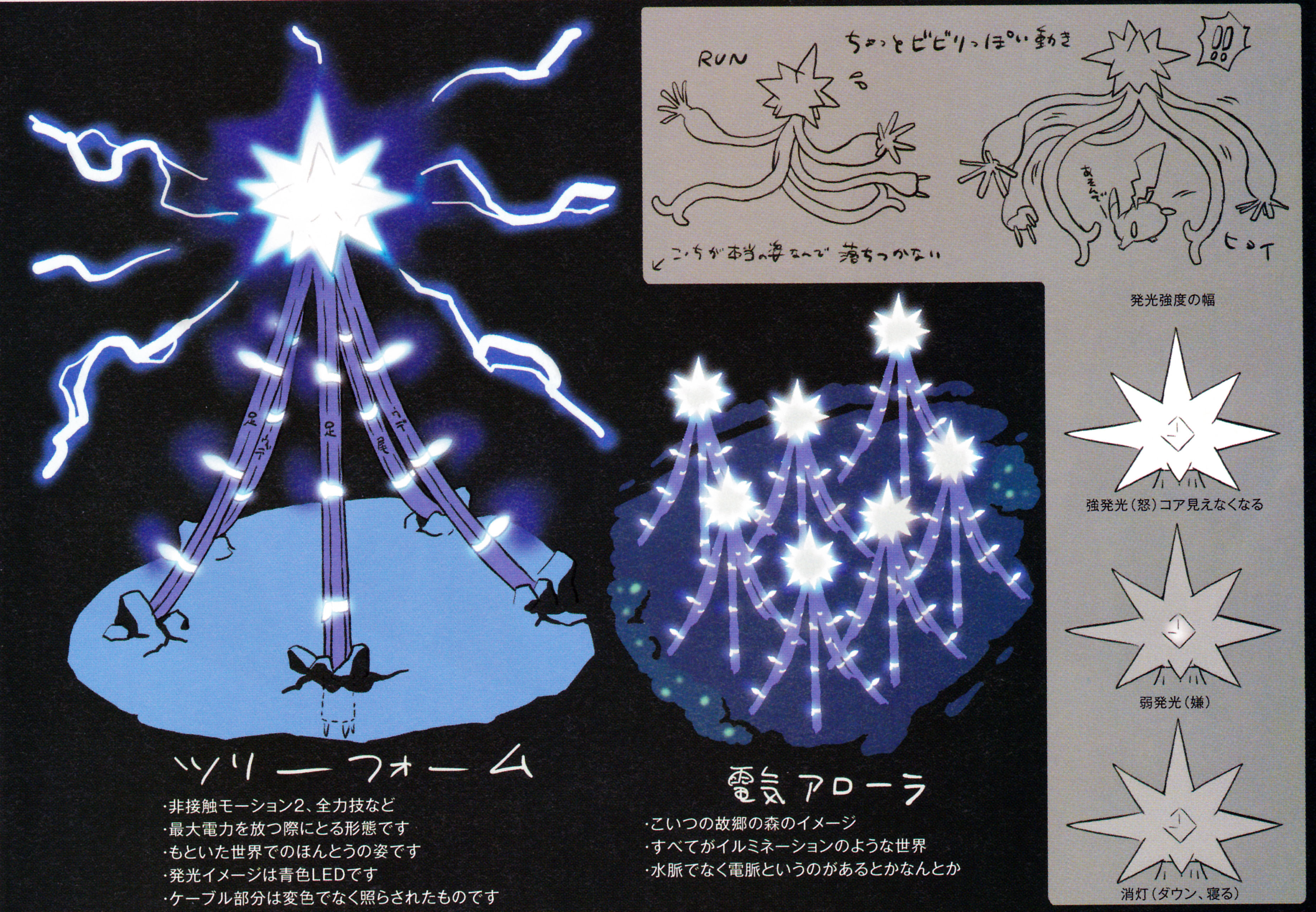
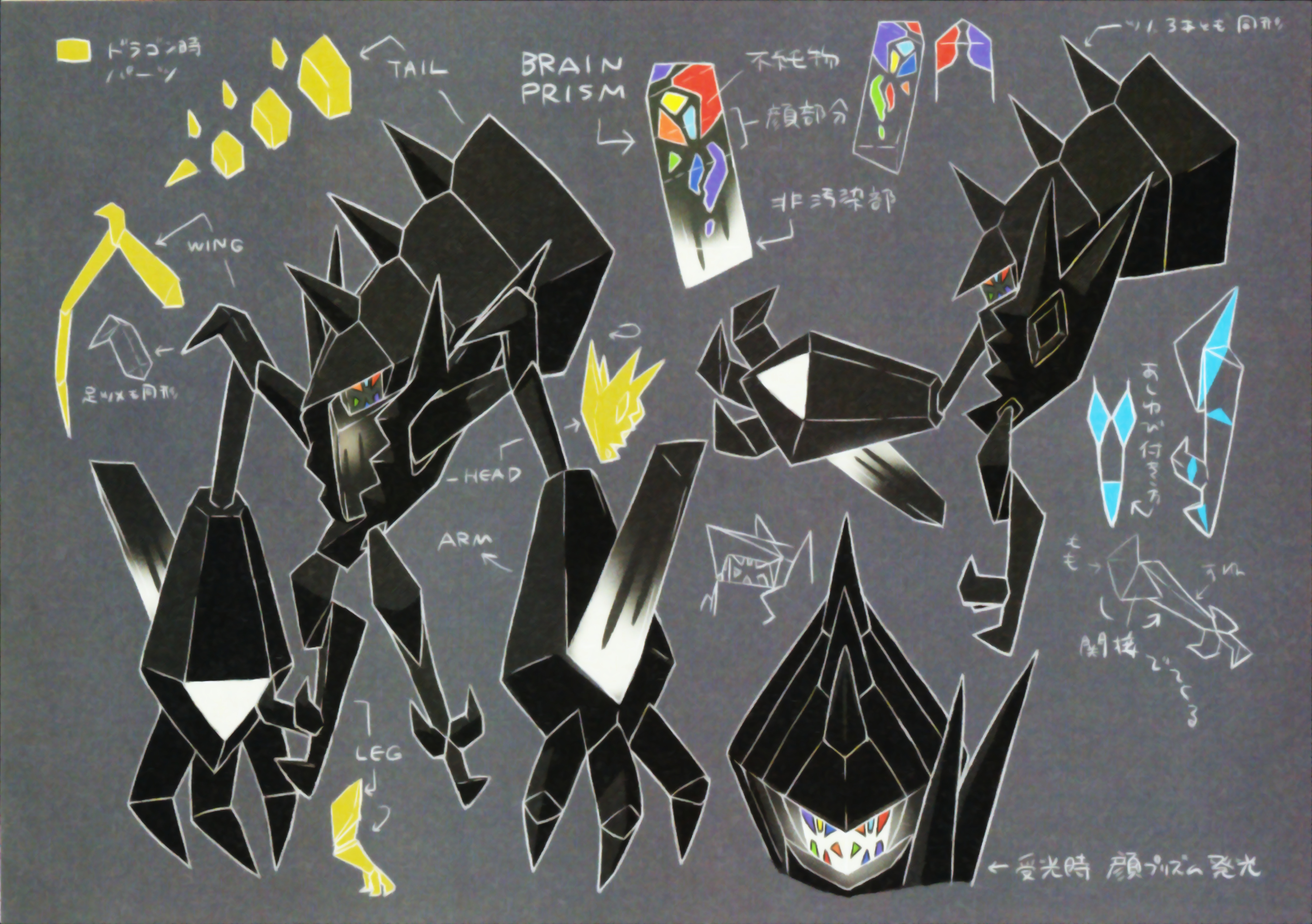

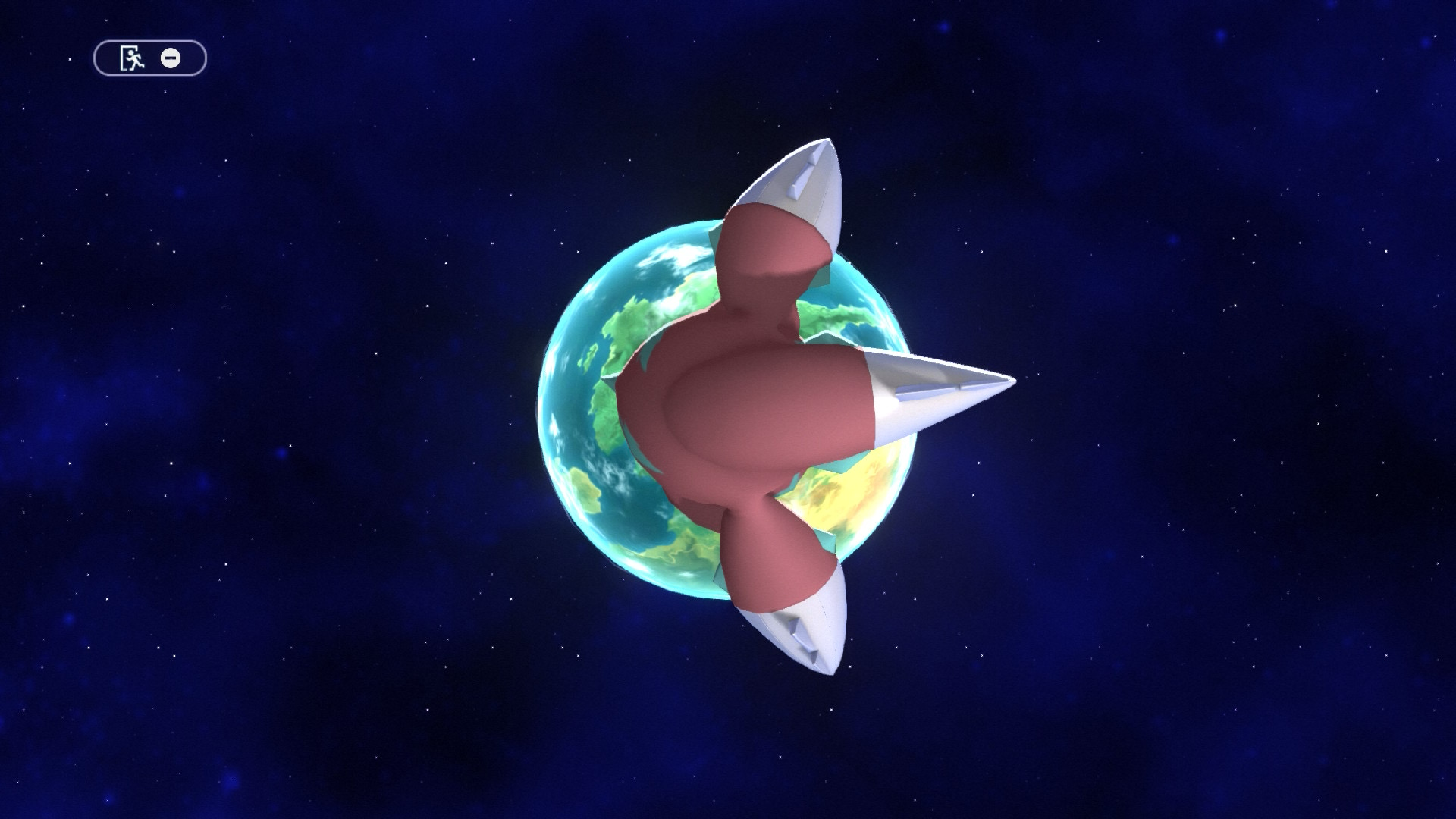

Comments
Post a Comment